


Why Weld Integrity Matters in Chainmail Aprons
Why Weld Integrity Matters in Chainmail Aprons
When you’re shopping for a chainmail apron, whether it’s for industrial use, cosplay, or historical reenactments, it’s easy to get lost in the sea of products available online. Many claim to offer top-notch protection, but how do you really know if the chainmail is up to the task? After all, you’re trusting this piece of armor to either keep you safe in a high-risk environment or to hold up as part of your cosplay masterpiece.
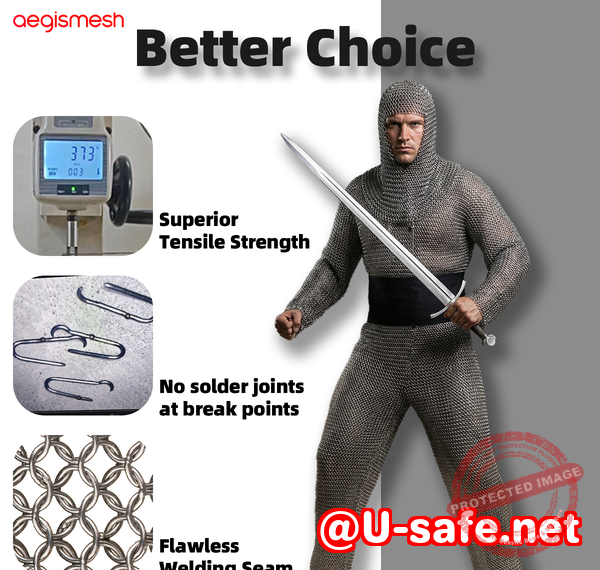
I often get asked how to distinguish between high-quality and low-quality chainmail. The short answer: weld integrity. But what exactly does that mean, and how can you evaluate it before making your purchase? In this article, I’ll walk you through the importance of weld integrity, how to evaluate it, and how to make sure your chainmail productbe it an apron, gloves, or decorative pieceis as strong and durable as it claims to be.
The Chainmail Struggle: How to Tell What’s Quality and What’s Not
I know it can feel overwhelming when you’re looking at chainmail products. Whether you’re purchasing for protection in an industrial setting or looking for a display piece to complete your medieval costume, there are so many factors to consider. You’re not just buying metal rings strung together; you’re investing in a product that needs to meet certain safety and durability standards.
One common pain point I see buyers face is distinguishing between chainmail made with welded rings versus open rings. Sure, it looks similar at a glance, but there’s a huge difference in terms of safety and longevity. Another challenge is understanding the quality of the stainless steel used. Different grades can significantly affect corrosion resistance and durability. And, of course, there’s the weave pattern itself. The most popular pattern, European 4-in-1, is known for its balance of strength and flexibility, but even this weave can vary in quality depending on the craftsmanship.
I want to make sure you don’t fall into the trap of buying chainmail that looks good but doesn’t offer the protection or durability you expect. That’s why I’m going to break down some of the ways you can evaluate chainmail quality before you make your next purchase.
Step-by-Step Guide to Evaluating Chainmail Quality
Here are some key factors you should consider when evaluating chainmail, and why they matter so much.
1. Welded Rings vs. Open Rings
The first thing you want to check is whether the rings are welded or open. Open rings are cheap and often used in decorative pieces or lower-quality products. These rings can come undone over time, especially under stress, which can compromise the entire chainmail structure. On the other hand, welded rings are permanently closed, ensuring that each link stays intact. This is crucial for safety, especially in industrial applications or any setting where protection is needed.
To test if the rings are welded, you can perform a simple inspection with a magnifying glass. Welds should be visible at the edges of each ring, and the surface will have a slight bulge or bead around the join. If you can’t see this, the rings may not be welded.
2. Material: 304 vs. 316 Stainless Steel
Another important factor is the type of stainless steel used. Not all chainmail is created equal. There are different grades of stainless steel, but the two most common ones you’ll encounter are 304 and 316.
-
304 Stainless Steel is great for most applications but has limited resistance to corrosion, especially in salty or humid environments.
-
316 Stainless Steel is a higher grade, offering superior resistance to corrosion and rust. If you’re using your chainmail in environments where it might be exposed to moisture or chemicals (like food processing or industrial settings), 316 steel is the better choice.
For buyers looking for high-quality, long-lasting chainmail, 316 is worth the extra cost.
3. Wire Thickness and Inner Diameter
Chainmail rings come in various wire thicknesses, which directly affect the strength and flexibility of the material. Thicker wires typically result in stronger, more durable chainmail, but they can also make the fabric stiffer. The key is finding the right balance for your intended use. For protective purposes, you want wire that is thick enough to resist cutting or abrasion but not so thick that it hinders movement or flexibility.
The inner diameter (ID) of the rings also affects the overall sturdiness. If the rings are too large, the weave can lose strength. On the other hand, rings that are too small can make the material too rigid or difficult to maintain. A good rule of thumb is to aim for rings with an inner diameter that allows for smooth movement but also provides maximum protection.
4. Weave Patterns
Weave patterns play a huge role in the strength and durability of chainmail. The most common weave used in both historical and modern chainmail products is European 4-in-1, where each ring is connected to four others in a square pattern. This weave is known for its balance of flexibility and strength, making it ideal for many uses, from industrial protection to cosplay.
When inspecting the weave, check to see that the pattern is consistent throughout the piece. Inconsistent or poorly crafted weaves can lead to weak spots where rings can break free under pressure. The more uniform the weave, the better the overall durability of the product.
Why Weld Integrity is Crucial
Now that you know what to look for in chainmail, let’s focus back on why weld integrity is so important. When rings are welded correctly, they ensure that the chainmail will remain intact under stress. This is particularly important for industrial cut-resistant chainmail, where safety is paramount.
In the world of chainmail, weak welds can be a disaster. Imagine using a chainmail apron while working with sharp tools or machinery. If the welds aren’t secure, the apron could fail at a critical moment, resulting in injury. That’s why I always recommend checking the welds closely before making a purchase.
How to Perform a Simple Pull Test
One of the easiest ways to check the strength and quality of chainmail is to perform a simple pull test. Here’s how:
-
Grab a section of the chainmail and apply some firm pressure.
-
Gently tug at the rings, one by one.
-
If you feel any rings that shift or come apart easily, that’s a sign the welds aren’t holding up.
For chainmail used in industrial or food-processing applications, I always advise buyers to ensure the welds are strong enough to withstand constant use and exposure to harsh environments.
Signs of Low-Quality or Unsafe Chainmail
Not sure if your chainmail is up to the task? Here are some red flags to look out for:
-
Weak or loose rings: If the rings are loose or can easily be pulled apart, the chainmail won’t provide the level of protection you need.
-
Visible rust or corrosion: Chainmail should not show signs of rust or corrosion, especially if it’s made from stainless steel. This is a clear sign that the material is of poor quality or that the welds are compromised.
-
Uneven or inconsistent weave: A quality chainmail product will have a uniform and tightly woven pattern. If the weave is uneven or loose in areas, it can lead to weak spots that could break under pressure.
Choosing the Right Chainmail for Your Needs
When choosing the right chainmail, it’s essential to consider the intended use. For example:
-
Industrial Use: If you need chainmail for cut protection or heavy-duty work environments, go for 316 stainless steel with welded rings and a strong, consistent European 4-in-1 weave.
-
Food Processing: For food handling, ensure your chainmail is made from food-grade stainless steel and is easily washable.
-
Cosplay or Historical Replicas: For decorative purposes, you may not need the highest-grade material, but still, look for welded rings and a solid weave to ensure longevity.
Conclusion: Make Informed Chainmail Purchases
In summary, evaluating chainmail quality boils down to three key areas: weld integrity, material quality, and weave strength. I highly recommend following these steps to ensure any chainmail purchase meets safety and durability standards. Whether you’re protecting yourself in an industrial environment or adding authenticity to a cosplay outfit, understanding these factors will help you make the right choice.
Learn more about identifying high-quality chainmail products: Aegimesh Chainmail
Check out our detailed chainmail inspection guide today.
常见问题解答
-
How can I tell if a chainmail ring is welded or open?
-
Look closely at the edges of the rings. Welded rings will have a visible seam or bead at the joint, while open rings will have a noticeable gap.
-
-
Which stainless steel grade is best for long-lasting chainmail?
-
316 stainless steel is the best choice for durability, especially in environments prone to corrosion, while 304 is sufficient for most other uses.
-
-
How do I inspect the weave pattern for strength?
-
Look for a uniform, tightly woven pattern, like the European 4-in-1. A consistent weave ensures durability and flexibility.
-
-
What are the signs of low-quality or unsafe chainmail?
-
Weak rings, rust, inconsistent weaving, or poor craftsmanship are all signs of low-quality chainmail.
-
-
Can decorative chainmail be used for protective purposes?
-
Generally, decorative chainmail isn’t as durable or protective as industrial-grade chainmail. Always check the welds and material quality if you need protection.
-
-
How do I choose the right chainmail for industrial vs cosplay use?
-
For industrial use, prioritize welded rings, 316
-




 한국어
한국어  Русский
  Deutsch
  العربية