


Understanding the Key Testing Procedures in EN 1082 for Chainmail
Understanding the Key Testing Procedures in EN 1082 for Chainmail
When I first started exploring the world of chainmail, one of the biggest challenges I faced was figuring out what truly makes a quality piece. Whether I was looking for a set of medieval armor for reenactment, a practical solution for industrial cut protection, or even a decorative cosplay accessory, the question always remained the same: How do I ensure I’m investing in high-quality chainmail that’s safe, durable, and will stand the test of time?
It’s a problem many buyers and collectors face, and it’s often difficult to discern between a sturdy, well-crafted piece of chainmail and one that’s poorly made or unsafe. If you’ve ever felt unsure about your chainmail purchases, you’re not alone. Today, I’m here to help you navigate this process and share some tips on how to evaluate chainmail products using the critical testing procedures outlined in EN 1082. By the end of this guide, you’ll feel much more confident in your ability to choose the best chainmail for your needs, whether you’re using it for industrial purposes, cosplay, or historical displays.
Pain Points When Evaluating Chainmail Quality
As I started diving deeper into the world of chainmail, I quickly realized that it’s not as simple as just buying the shiniest or most visually appealing piece. Chainmail is an investment, whether it’s for personal protection, a collector’s item, or a practical tool for specific tasks like food processing or industrial safety. Here are some of the most common pain points I facedand that many others encounterwhen evaluating chainmail:
-
Welded vs. Open Rings: One of the first challenges I faced was distinguishing between welded and open rings. The difference is crucial, especially for safety. Open rings are less durable and can easily come apart under stress, which can be dangerous in industrial or protective settings.
-
Stainless Steel Grades: Another challenge was understanding the difference between 304 and 316 stainless steel. Not all stainless steel is created equal, and knowing which grade is best for my intended use wasn’t as straightforward as I expected.
-
Weak Weaves and Poor Craftsmanship: Inconsistencies in the weave can affect the overall strength of chainmail. A poorly woven piece may not provide adequate protection, making it unsuitable for industrial use or cosplay purposes that demand durability.
-
Uncertainty About Appropriate Use: Sometimes, it’s not obvious whether a piece of chainmail is designed for protection or merely decorative use. This is especially true in the world of cosplay, where people often look for something that’s visually stunning but may not realize the material isn’t built for safety.
How Aegimesh Chainmail Can Help
Fortunately, Aegimesh Chainmail has a solution for these challenges. Their chainmail products are crafted with meticulous attention to detail and are designed to meet the strict standards of EN 1082, which outlines the testing procedures for evaluating chainmail quality. Here’s how Aegimesh helps you address these pain points:
-
Material Quality: Aegimesh offers chainmail made from high-quality stainless steel, including 304 and 316 grades. These are the most common types used for protective and industrial purposes, with 316 being slightly more corrosion-resistant than 304.
-
Welded Rings: The Aegimesh chainmail features welded rings rather than open rings. This ensures the rings stay intact under pressure, providing greater strength and durability.
-
Weave Patterns: The European 4-in-1 weave is used extensively in Aegimesh products, ensuring strength and flexibility. This weave is highly regarded in the chainmail world for its robustness and durability.
A Step-by-Step Guide to Inspecting Chainmail Quality
So, how do you know if the chainmail you’re considering is top-notch? Here’s a simple, step-by-step guide that anyone can follow to evaluate chainmail quality. These methods are easy to implement and will give you peace of mind when shopping for chainmail.
1. Check the Material
The first thing I always do when evaluating chainmail is to check the material. There’s a big difference between different grades of stainless steel, and this can make or break the effectiveness of the chainmail.
-
304 Stainless Steel: This is the most commonly used grade for general purpose chainmail. It’s durable and resistant to corrosion, but it’s not ideal for all environments, particularly marine or highly acidic ones.
-
316 Stainless Steel: This grade has slightly more corrosion resistance than 304, making it perfect for industrial applications or environments exposed to harsh conditions.
It’s easy to tell if the chainmail is made from one of these grades, as high-quality products will often list the material on the product description or packaging.
2. Inspect the Ring Welding
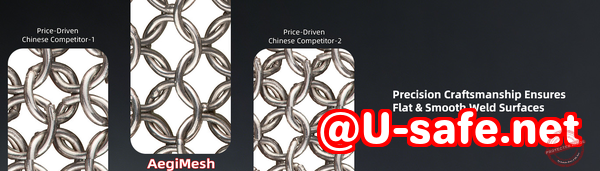
Once you’ve confirmed the material, the next step is to inspect the rings themselves. Are they welded or open? Open rings can break apart more easily, leading to poor protection or durability. On the other hand, welded rings are stronger and more reliable.
To check if the rings are welded, look closely at the join. There should be a smooth, seamless line where the ends of the ring meet, with no gaps. If you see a noticeable gap or if the rings look flimsy, it’s likely an open ring construction.
3. Evaluate Wire Thickness and Inner Diameter
The thickness of the wire used to make the rings is another important factor to consider. A thicker wire usually means a more durable piece of chainmail, which is especially important for protective chainmail used in industrial settings.
The inner diameter of the rings is also a crucial factor. For instance, if the diameter is too large, the rings may not fit tightly together, making the weave weak. If it’s too small, it may cause the chainmail to be stiff and less flexible.
Aegimesh chainmail provides detailed specifications on wire thickness and inner diameter, making it easier to select the perfect option for your needs.
4. Assess the Weave Pattern
One of the most important tests for chainmail strength is inspecting the weave pattern. The European 4-in-1 weave is a popular and highly recommended pattern for its balance of strength and flexibility. It’s ideal for both protective and decorative chainmail.
If you’re buying chainmail for safety purposes, make sure the weave is tight and consistent. Any gaps or unevenness can compromise the integrity of the piece. You can perform a simple pull test by gently pulling on the weave in different directions to ensure it holds together well.
Why Proper Chainmail Inspection Matters
Proper inspection is critical for a few reasons:
-
Safety: Whether for industrial use or food handling, subpar chainmail can lead to serious injuries if it doesn’t hold up under pressure.
-
Durability: Low-quality chainmail will wear out faster, costing you more in replacements.
-
Money: By identifying low-quality chainmail before purchase, you avoid wasting money on products that don’t meet your expectations or requirements.
Conclusion
After following these steps, I can confidently say that you’ll be able to evaluate chainmail quality with ease. From checking the material to inspecting the rings and weave pattern, these guidelines will help you ensure that any chainmail you purchase meets the necessary safety and durability standards.
I highly recommend following these steps whenever you buy chainmail, whether for industrial use, cosplay, or historical purposes. By doing so, you’ll avoid unsafe purchases and make sure you’re investing in high-quality products that will last.
If you’d like to learn more about identifying high-quality chainmail products, visit our detailed chainmail inspection guide at Aegimesh Chainmail.
Perguntas frequentes
How can I tell if a chainmail ring is welded or open?
Look for a smooth, seamless join in the ring. If there’s a gap or visible flaw, it’s likely an open ring.
Which stainless steel grade is best for long-lasting chainmail?
304 stainless steel is fine for most purposes, but 316 is ideal for environments exposed to harsh conditions or corrosion.
How do I inspect the weave pattern for strength?
Check for evenness and consistency in the weave. Pull gently in different directions to see if the weave holds together under tension.
What are the signs of low-quality or unsafe chainmail?
Look for poorly welded rings, uneven wire thickness, and weak or inconsistent weaves. These can all compromise safety and durability.
Can decorative chainmail be used for protective purposes?
Generally, decorative chainmail isn’t designed for protection, as it may have open rings or weaker weaves.
How do I choose the right chainmail for industrial vs. cosplay use?
For industrial use, look for welded rings, thick wire, and tight weaves. For cosplay, focus more on aesthetic appeal, but ensure the material can withstand wear and tear.
Tags or Keywords
chainmail quality, welded rings, stainless steel chainmail, cut-resistant chainmail, chainmail inspection, European 4-in-1 weave, chainmail durability
Explore Aegimesh Chainmail Software at: https://www.aegimesh.com/




 한국어
한국어  Русский
  Deutsch
  العربية