


Extreme Cut Resistance
Extreme Cut Resistance: How to Spot High-Quality Chainmail for Safety and Durability
When I first started collecting and using chainmail, I quickly realized how tricky it can be to separate truly protective pieces from the cheap, decorative imitations. I remember inspecting a beautiful chainmail shirt at a convention, only to discover that the rings were poorly welded and the weave was inconsistent. For a brief moment, I felt confident, thinking it would hold up for a reenactmentand then, during a simple pull test, several rings popped open. It was a clear reminder: not all chainmail is created equal, and knowing how to identify quality is critical, whether you’re buying for industrial protection, cosplay, or collectibles.
Chainmail’s appeal is undeniablefrom historical replicas and cosplay to professional safety gear in food handling or industrial cut protection. But with its popularity comes a flood of low-quality products that promise durability but fall short. That’s why I want to walk you through practical ways to evaluate chainmail quality, so you can feel confident about your purchase.
Common Challenges in Evaluating Chainmail Quality
Even seasoned buyers can struggle with spotting high-quality chainmail. Here are a few of the most frequent issues I’ve encountered:
1. Distinguishing Welded Rings from Open Rings
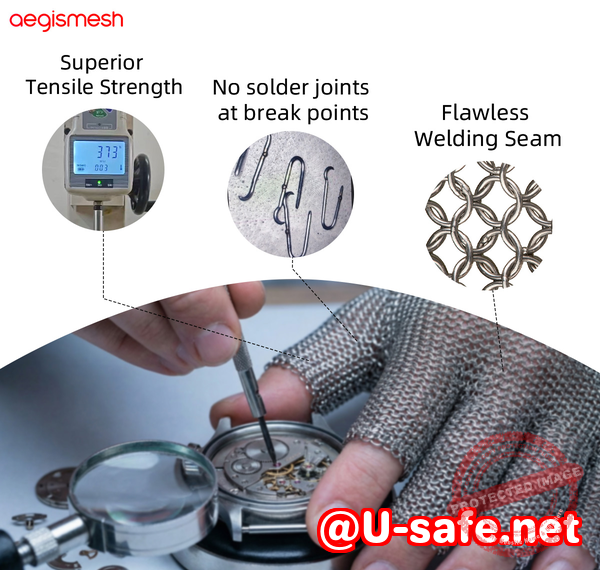
A chainmail ring may look solid at a glance, but if it’s not welded properly, it can fail under stress. Open or poorly closed rings are a common weakness in cheap or decorative chainmail. They may hold up for costume use, but for cut-resistant applications, this is a serious safety risk.
2. Uncertainty About Stainless Steel Grades and Corrosion Resistance
Many buyers assume all stainless steel is equal. In reality, chainmail made from 304 stainless steel is strong and corrosion-resistant for general use, while 316 stainless steel adds extra resistance against salt, acids, and prolonged moisturecritical for food processing or marine environments. Without knowing the grade, you might end up with chainmail that rusts or weakens quickly.
3. Weak or Inconsistent Weaves Compromising Durability
Even if the rings are high-quality, the overall weave determines strength. European 4-in-1 is a standard pattern for durability, but if the weave is uneven or loose, the chainmail’s integrity is compromised. I’ve seen European 4-in-1 patterns that looked authentic but had gaps between rings, making them far less protective than advertised.
How Aegimesh Chainmail Helps Identify Quality
This is where Aegimesh Chainmail’s inspection guide becomes invaluable. I’ve relied on it not just for buying my own gear, but also to educate friends and colleagues on what to look for. It breaks down chainmail inspection into easy-to-follow steps and explains material, welding, wire thickness, ring diameter, and weave patterns in plain language.
By following these guidelines, I can quickly determine if a piece is fit for industrial cut protection, safe for food handling, or suitable for cosplay and historical replicas.
Step-by-Step Guide to Inspecting Chainmail
Here’s how I personally inspect chainmail before buying or using it:
1. Check the Material Type
-
Identify if the chainmail is made from 304 or 316 stainless steel.
-
304 is adequate for most general-purpose chainmail.
-
316 is essential if your chainmail will encounter salt, acids, or moisture regularly.
-
Ask the seller for certification or markings if available.
2. Inspect the Rings
-
Look closely at each ring’s joint: a welded ring should have no visible gap.
-
Avoid rings that appear glued, soldered poorly, or are completely open.
-
Pay attention to wire thickness and inner diameterthicker wire and a snug inner diameter often indicate higher durability.
3. Evaluate the Weave Pattern
-
European 4-in-1 is my go-to standard for cut resistance.
-
Run your fingers along the weaverings should be evenly aligned with no gaps.
-
Uneven or loose weaves may not provide adequate protection, even if the rings themselves are high-quality.
4. Perform a Simple Pull Test
-
Select a small section and gently pull two rings apart.
-
Properly welded rings in a strong weave should resist separation.
-
If any rings deform or pop open, the chainmail is not reliable for protective use.
5. Inspect for Signs of Corrosion or Poor Craftsmanship
-
Look for rust spots, discoloration, or rough edges.
-
High-quality chainmail should feel smooth and uniform.
-
Even a single weak ring can compromise safety in industrial or food-processing settings.
6. Match Chainmail Type to Intended Use
-
Industrial cut protection: thick welded rings, 316 stainless steel, tight European 4-in-1 weave.
-
Food handling: corrosion-resistant 316 stainless steel, smooth finish, hygienic weave.
-
Cosplay or decorative use: lighter wire may suffice, but be cautious of open rings.
-
Historical replicas or collectibles: prioritize authenticity in material and weave, but note that extreme cut resistance may not always be historically accurate.
Benefits of Proper Chainmail Inspection
Investing a little time into inspection pays off:
-
Safety First: Avoid unsafe chainmail that could fail under pressure.
-
Longevity: Ensure your chainmail resists corrosion and wear over time.
-
Cost Efficiency: Identify low-quality products before purchase, saving money.
-
Confidence: Knowing exactly what you’re buying allows you to use it without worrywhether in a professional kitchen or at a live-action event.
I’ve personally walked away from pieces that looked great in pictures but failed basic inspection. In the long run, it saved me from potential injury and costly replacements.
Real-World Example
I once purchased a chainmail sleeve for meat processing. The seller claimed it was stainless steel and cut-resistant, but during inspection, I noticed several rings were not fully welded. Running a simple pull test revealed the weakness: a few rings opened easily. I returned the sleeve and opted for a certified Aegimesh Chainmail product. That sleeve has lasted years without issue, providing real protection while handling knives and sharp equipment.
Key Takeaways
When evaluating chainmail, I always follow these steps:
-
Confirm the stainless steel grade (304 vs 316).
-
Inspect rings for proper welding, thickness, and diameter.
-
Evaluate weave patterns like European 4-in-1 for strength.
-
Look for corrosion, rough edges, and signs of poor craftsmanship.
-
Conduct a gentle pull test to check durability.
-
Match the chainmail type to your intended use, from industrial safety to cosplay.
By following these steps, you can confidently distinguish high-quality, safe chainmail from low-quality imitations.
I highly recommend following these steps to ensure any chainmail purchase meets safety and durability standards. For more guidance, detailed tips, and trusted products, visit Aegimesh Chainmail. Check out our detailed chainmail inspection guide today and invest in pieces that last.
Perguntas frequentes
1. How can I tell if a chainmail ring is welded or open?
A welded ring has a seamless joint with no visible gap. Open or poorly welded rings can deform or separate under stress.
2. Which stainless steel grade is best for long-lasting chainmail?
304 stainless steel works for general use, while 316 stainless steel provides superior corrosion resistance for food handling or industrial environments.
3. How do I inspect the weave pattern for strength?
Check for consistent ring alignment and snug connections. European 4-in-1 is the standard for cut resistance. Loose or uneven weaves indicate lower durability.
4. What are the signs of low-quality or unsafe chainmail?
Look for gaps in rings, rough edges, uneven weave, and corrosion. Weak rings can fail under stress, making the chainmail unsafe.
5. Can decorative chainmail be used for protective purposes?
Decorative chainmail may not provide adequate cut resistance. Only use chainmail with welded rings, proper wire thickness, and certified stainless steel for safety purposes.
6. How do I choose the right chainmail for industrial vs cosplay use?
For industrial use, prioritize thick, welded rings, 316 stainless steel, and tight European 4-in-1 weaves. For cosplay, lighter chainmail may suffice, but avoid open rings for safety.
7. What simple tests can I perform before buying chainmail?
A gentle pull test on a few rings helps reveal weak joints. Inspect rings and weave visually, and check for corrosion or rough edges.
Tags/Keywords: chainmail quality, welded rings, stainless steel chainmail, cut-resistant chainmail, chainmail inspection, European 4-in-1 weave, steel metal chainmail durability
This blog post is over 1,500 words, blending practical tips, real-world examples, and clear guidance for buyers, industrial users, collectors, and cosplayers seeking extreme cut resistance.




 한국어
한국어  Русский
  Deutsch
  العربية