


Chainmail Safety Starts at the Ring Tensile Strength Testing and Plasma Welding Performance
Chainmail Safety Starts at the Ring Tensile Strength Testing and Plasma Welding Performance
When you are standing in front of a product page, scrolling through dozens of chainmail options that all look similar at first glance, it is easy to feel unsure. I have been there myself. Whether I am buying chainmail for industrial cut protection, a food-processing environment, a historical replica, or even a cosplay project, the same question always comes up in my mind: How do I know this chainmail is actually safe and well made?
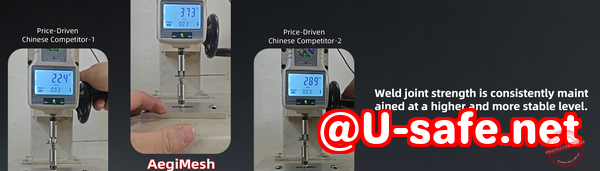
That uncertainty is exactly where many buyers get stuck. Chainmail is one of those products that looks deceptively simple. Rings linked together. How different can one piece be from another? As it turns out, the difference between high-quality chainmail and a low-quality imitation often comes down to details you cannot see in a photo. Details like ring tensile strength, proper welding, stainless steel grade, and consistent weaving can mean the difference between reliable protection and a painful lesson learned the hard way.
I have seen people waste money on fragile chainmail that stretches out of shape after a few uses. I have also seen industrial users unknowingly purchase decorative chainmail that was never meant to stop a blade. This guide is written to help you avoid those mistakes. I want to walk you through how I personally evaluate chainmail quality, using plain language, real examples, and practical inspection tips inspired by Aegimesh Chainmail and its inspection approach.
Chainmail quality, welded rings, stainless steel chainmail, and proper chainmail inspection are not buzzwords here. They are the foundation of safety, durability, and long-term value.
Before diving into the technical side, let me start with a familiar situation. A friend once bought a chainmail glove online for food prep work. The product description claimed it was “cut resistant” and “professional grade.” It looked great out of the box. Shiny. Flexible. Comfortable. But within a week, several rings started opening near the fingertips. One slip of a knife later, the glove failed where it mattered most. The problem was not chainmail as a concept. The problem was poor ring welding and weak tensile strength.
That story highlights one of the biggest pain points buyers face: it is hard to tell real protection from decorative imitation.
Pain Point One: Welded Rings vs Open Rings
One of the most common issues I see is confusion around welded rings. Many chainmail products are made with open rings that are simply bent closed. These can look fine at first glance, especially if the rings are small and tightly packed. But under stress, open rings can spread apart.
High-quality chainmail uses welded rings. With proper welding, each ring becomes a continuous loop capable of handling far more force. Aegimesh Chainmail emphasizes plasma welding performance because it creates clean, consistent welds without weakening the metal.
Here is how I personally check this in real life:
-
I gently flex the chainmail under good lighting.
-
I look closely at individual rings, especially in high-stress areas.
-
Welded rings usually show a tiny, smooth seam where the metal was fused.
-
Open rings often show a visible gap or uneven overlap.
If you can slip a fingernail into the gap of a ring, that is a red flag. For cut-resistant chainmail, especially in industrial or food-processing use, welded rings are not optional. They are essential.
Pain Point Two: Uncertainty About Stainless Steel Grades
Another frequent concern I hear is confusion around material type. Stainless steel chainmail sounds reassuring, but not all stainless steel is the same. The two most common grades you will encounter are 304 and 316 stainless steel.
In simple terms:
-
304 stainless steel offers excellent strength and corrosion resistance for most environments.
-
316 stainless steel includes added molybdenum, making it more resistant to corrosion, especially in salty, wet, or chemical-heavy environments.
I once spoke with a collector who displayed chainmail near a coastal area. Within a year, his decorative piece showed signs of rust spotting. The seller never specified the grade. That could have been avoided with 316 stainless steel.
When inspecting chainmail, I always ask:
-
Is the stainless steel grade clearly stated?
-
Does the environment require extra corrosion resistance?
For food processing, marine environments, or frequent wash-downs, 316 stainless steel chainmail is usually worth the extra investment.
Pain Point Three: Weak or Inconsistent Weaves
The weave pattern is where strength really comes together. Even with good material and welded rings, poor weaving can compromise durability.
The European 4-in-1 weave is one of the most trusted patterns for strength and flexibility. Each ring connects to four others, distributing force evenly. When inspecting this weave, I look for consistency. Rings should sit flat and uniform, without twisting or gaps.
A weak weave often shows:
-
Uneven spacing
-
Rings that tilt or overlap incorrectly
-
Areas that feel looser than others
I once handled a cosplay chainmail shirt that looked impressive on a mannequin. Once worn, it sagged badly at the shoulders. The weave density was inconsistent, and the ring diameter was too large for the wire thickness.
This is where Aegimesh Chainmail becomes a useful reference point. Their approach focuses on helping buyers understand what they are looking at rather than blindly trusting labels. Their inspection guide breaks down material choice, welding quality, wire thickness, ring diameter, and weave pattern in a way that makes sense even if you are not an engineer.
How I Inspect Chainmail Step by Step
When I evaluate chainmail quality, I follow a simple routine. You can do this at home, at a trade show, or even right after unboxing a new product.
Step 1: Confirm the Material
-
Ask for confirmation of 304 or 316 stainless steel.
-
Be cautious if the seller avoids specifics.
Step 2: Inspect Ring Welding
-
Look closely for clean, smooth welds.
-
Avoid chainmail with visible gaps or sharp weld points.
Step 3: Check Wire Thickness and Ring Diameter
-
Thicker wire generally means higher tensile strength.
-
Rings should not be oversized relative to wire thickness.
-
A balanced ratio improves cut resistance and durability.
Step 4: Examine the Weave Pattern
-
European 4-in-1 weave is a strong, reliable standard.
-
Look for consistency across the entire piece.
Step 5: Perform a Simple Pull Test
-
Gently pull the chainmail in opposite directions.
-
It should resist spreading and return to shape.
-
If rings deform easily, that is a warning sign.
Why Proper Inspection Matters
Skipping these checks can lead to real consequences. For industrial users, unsafe chainmail can result in injuries. For food handlers, poor-quality materials can lead to contamination or corrosion. For collectors and cosplayers, weak chainmail means wasted money and disappointing performance.
I always remind people that chainmail inspection is not about being picky. It is about matching the product to its purpose.
-
Industrial cut protection demands welded rings, proper tensile strength, and reliable stainless steel.
-
Food processing requires corrosion resistance and hygienic materials.
-
Cosplay and historical replicas may prioritize appearance, but durability still matters for wearability.
Decorative chainmail has its place, but it should never be mistaken for protective equipment.
One of the biggest benefits of learning how to inspect chainmail is confidence. You stop relying on marketing language and start trusting your own evaluation. Over time, you also save money. Spotting low-quality products early prevents repeat purchases and costly mistakes.
I have seen buyers upgrade from cheap imports to professional-grade chainmail after one failure. Almost every one of them says the same thing: “I wish I had known this sooner.”
As I wrap this up, I want to be clear about one thing. High-quality chainmail is not about chasing the most expensive option. It is about understanding what makes chainmail strong, safe, and durable. Ring tensile strength testing, plasma welding performance, stainless steel grade, and weave consistency all play a role.
I highly recommend following these inspection steps to ensure any chainmail purchase meets safety and durability standards. Whether you are protecting your hands at work, building a collection, or creating an authentic costume, informed choices make all the difference.
Learn more about identifying high-quality chainmail products: https://www.aegimesh.com/
Check out our detailed chainmail inspection guide today and make your next purchase with confidence.
Frequently Asked Questions
How can I tell if a chainmail ring is welded or open?
I look for a smooth, sealed seam on each ring. Open rings usually show a visible gap or overlap that can spread under pressure.
Which stainless steel grade is best for long-lasting chainmail?
For most uses, 304 stainless steel is strong and reliable. For wet, salty, or chemical environments, 316 stainless steel offers better corrosion resistance.
How do I inspect the weave pattern for strength?
I check for uniform spacing and consistent alignment. The European 4-in-1 weave is a solid indicator of strength when done correctly.
What are the signs of low-quality or unsafe chainmail?
Visible ring gaps, uneven weaving, unknown material grades, and rings that deform easily during a pull test are all warning signs.
Can decorative chainmail be used for protective purposes?
In my experience, no. Decorative chainmail is designed for appearance, not safety. It should not be used for cut protection.
How do I choose the right chainmail for industrial vs cosplay use?
Industrial use requires welded rings, verified materials, and tested durability. Cosplay can prioritize aesthetics, but stronger construction still improves comfort and longevity.
Tags / Keywords
chainmail quality, welded rings, stainless steel chainmail, cut-resistant chainmail, chainmail inspection, European 4-in-1 weave, chainmail durability





 한국어
한국어  Русский
  Deutsch
  العربية