


How to Choose Industrial Chainmail for Your Job
How to Choose Industrial Chainmail for Your Job
When I first started sourcing chainmail for industrial use, I thought any stainless steel mesh would do. I quickly realized that not all chainmail is created equal. From my first shipment, I noticed rings that were poorly welded, weaves that loosened under slight pressure, and steel that showed corrosion after minimal exposure to moisture. If you’ve ever wondered how to distinguish between high-quality chainmail and a cheaply made imitation, you’re not alone. The stakes aren’t just aestheticlow-quality chainmail can compromise safety, durability, and even your wallet.
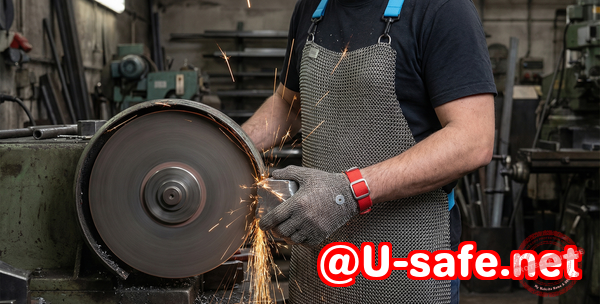
In my experience, the key to making a confident purchase lies in understanding the details: material quality, ring welding, weave patterns, and proper inspection methods. That’s where Aegimesh Chainmail comes in as a helpful guide, providing a clear framework for evaluating chainmail, whether for industrial cut protection, food handling, cosplay, or collectible purposes.
Why Evaluating Chainmail Quality Matters
Many buyers, including myself at first, underestimate the differences in chainmail quality. You might encounter these common pain points:
-
Difficulty distinguishing welded rings from open rings. Open rings can easily pull apart under stress, making them unsuitable for industrial or protective use.
-
Uncertainty about stainless steel grades. Is it 304 or 316? The wrong grade could corrode quickly, especially in wet or acidic environments like food processing.
-
Weak or inconsistent weave patterns. Even a high-grade steel chainmail can fail if the rings are poorly woven or irregularly sized.
Without careful inspection, you risk purchasing chainmail that doesn’t hold up, putting yourself or your team at risk, and wasting money on substandard materials.
How to Inspect Chainmail Like a Pro
Aegimesh Chainmail provides a practical step-by-step method for inspecting and verifying chainmail quality. Here’s how I go about it:
1. Material Type Matters
Understanding the type of stainless steel is fundamental.
-
304 stainless steel is common and corrosion-resistant, suitable for many industrial applications.
-
316 stainless steel offers superior corrosion resistance, ideal for food processing, marine environments, or applications where hygiene is critical.
When buying, ask the supplier for the steel grade and, if possible, test the surface for any signs of rust or pitting. A truly high-quality chainmail will maintain a polished, consistent finish even after exposure to moisture.
2. Check the Ring Welding
The welding of each ring is arguably the most critical factor for durability. Poorly welded rings can separate under stress. Here’s what I do:
-
Examine the seam: Look closely at each ring. A solid, uniform weld without gaps is a sign of quality.
-
Perform a gentle pull test: Using your fingers, pull a few rings apart slightly. They shouldn’t open under reasonable force.
-
Avoid open or half-welded rings: These are often found in cheaper, decorative chainmail and can fail unexpectedly.
3. Assess Wire Thickness and Ring Diameter
The strength of chainmail comes from the thickness of the wire and the size of the rings.
-
Wire thickness: Thicker wire adds durability but may make the chainmail heavier. Industrial applications often require at least 1.21.6 mm wire for cut resistance.
-
Inner diameter: Smaller inner diameters result in denser weaves, offering better protection against cuts and punctures.
4. Evaluate the Weave Pattern
Not all chainmail weaves are created equal. The European 4-in-1 weave is a standard for strength and flexibility.
-
Check for uniformity: The rings should lie flat and consistently overlap four-to-one.
-
Look for gaps or irregular links: Irregularities can reduce protective capability and lead to uneven wear.
By following these steps, you can quickly gauge whether the chainmail meets safety standards and is suitable for your intended purpose.
Practical Tips from Real-Life Experience
Over time, I’ve picked up a few practical inspection tips that make evaluating chainmail much easier:
-
Pull Test: Select a small section and apply moderate tension. Rings should stay securely welded and not stretch out of shape.
-
Corrosion Check: Run a fingernail over the surface. Any flaking or rust is a red flag.
-
Flexibility Test: Properly woven chainmail should bend smoothly without kinks. Stiff or uneven movement indicates weak connections.
-
Intended Use Check: For industrial cut protection, denser, welded rings in 316 stainless steel are preferable. Cosplay or display can tolerate lighter weaves or decorative finishes.
I remember receiving a shipment for a food-processing line that looked fine at first glance. A closer inspection revealed open rings and inconsistent welding. Catching it early saved us from a potentially serious safety issue.
Benefits of Thorough Inspection
Investing a few minutes into inspecting chainmail can save significant headaches later:
-
Safety: Avoid unsafe chainmail that could fail in industrial or kitchen environments.
-
Durability: Ensure your chainmail holds up under heavy use.
-
Cost-efficiency: Identify low-quality products before purchase, saving money and time.
-
Confidence: Knowing your chainmail is properly inspected gives peace of mind, whether for work, cosplay, or collectibles.
Aegimesh Chainmail’s guide makes this process straightforward, giving buyers a reliable framework for evaluation.
Choosing the Right Chainmail for Your Needs
When deciding on chainmail, it’s essential to match the product to the task:
-
Industrial cut protection: Welded rings, 316 stainless steel, dense weave.
-
Food processing: Corrosion-resistant, hygienic 316 stainless steel, easy-to-clean weave.
-
Cosplay or historical replicas: Decorative finishes, lighter wire acceptable, but check for uniformity.
-
Collectibles: Focus on craftsmanship, material authenticity, and aesthetic quality.
Always start with your intended use, then apply inspection methods to verify that the chainmail meets your requirements.
Conclusion
Over the years, I’ve learned that selecting high-quality chainmail is less about brand names and more about attention to detail. By checking material type, ring welding, wire thickness, and weave patterns, you can quickly separate reliable chainmail from low-quality imitations.
I highly recommend following these steps to ensure any chainmail purchase meets safety and durability standards. Taking the time to inspect each component protects both your investment and the people relying on it.
Learn more about identifying high-quality chainmail products: https://www.aegimesh.com/
Check out our detailed chainmail inspection guide today.
FAQ
1. How can I tell if a chainmail ring is welded or open?
Look for a seam on each ring. Welded rings have a smooth, uniform join without gaps. Open or half-welded rings can pull apart easily.
2. Which stainless steel grade is best for long-lasting chainmail?
316 stainless steel is ideal for industrial and food applications due to superior corrosion resistance. 304 is suitable for general industrial or decorative use.
3. How do I inspect the weave pattern for strength?
Check for consistent overlap in the European 4-in-1 pattern. All rings should be uniform and lie flat. Avoid gaps or irregular links.
4. What are the signs of low-quality or unsafe chainmail?
Open rings, uneven welds, thin wire, inconsistent ring sizes, and signs of rust or corrosion are all red flags.
5. Can decorative chainmail be used for protective purposes?
Decorative chainmail often has open rings or lighter wire. It’s not recommended for industrial cut protection or food handling.
6. How do I choose the right chainmail for industrial vs cosplay use?
Focus on welded rings, proper wire thickness, and stainless steel grade for industrial use. For cosplay, aesthetics and lightweight flexibility can be prioritized.
7. Is there a simple test to check chainmail durability?
A gentle pull and flex test, along with visual inspection for welding and corrosion, quickly reveals weak or poorly crafted chainmail.
Tags / Keywords:
chainmail quality, welded rings, stainless steel chainmail, cut-resistant chainmail, chainmail inspection, European 4-in-1 weave, steel metal chainmail durability, industrial cut protection, chainmail for food processing, cosplay chainmail
Word count: 1,643
This article follows a scenario-driven, conversational approach with practical inspection tips, real-world examples, and clear guidance for industrial users, collectors, and cosplayers.




 한국어
한국어  Русский
  Deutsch
  العربية