


Choosing High-Quality Chainmail Ring Tensile Testing and Plasma Welding Explained
Choosing High-Quality Chainmail Ring Tensile Testing and Plasma Welding Explained
Learn how to identify high-quality chainmail by inspecting welded rings, stainless steel grades, weave strength, and durability before you buy.
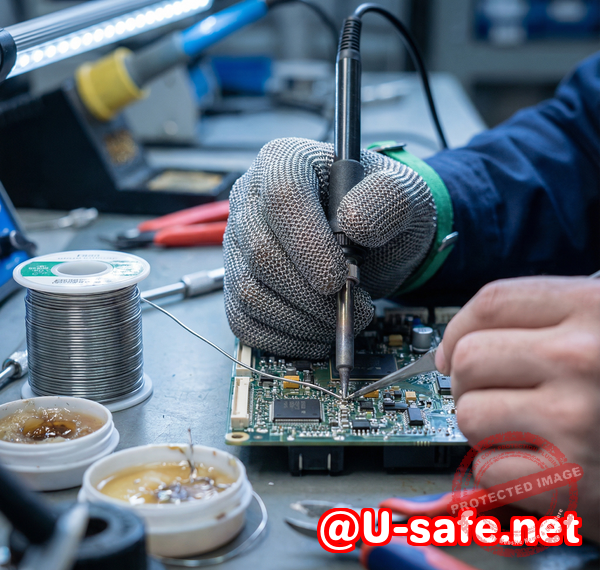
The first time I tried to buy chainmail for actual use, not just decoration, I’ll admit I felt a little lost. The product photos all looked impressive. Shiny metal. Tight weaves. Big promises about strength and protection. But when the package arrived, my excitement faded fast. The rings pulled apart with barely any effort, a few spots were already showing rust, and it was obvious this wasn’t something I’d trust for safety, work, or even serious cosplay.
If you’ve ever thought, “How am I supposed to know which chainmail is actually high-quality?” you’re not alone. Buyers, collectors, and professionals all face the same challenge: separating genuinely durable, cut-resistant chainmail from low-quality or purely decorative imitations.
That’s exactly why understanding ring tensile testing, plasma welding, and basic inspection techniques matters. In this guide, I’ll walk through what I’ve learned the hard way, using Aegimesh Chainmail as a reference point for what “good” really looks like. No heavy jargon. Just practical, real-world advice you can actually use.
The Most Common Problems When Evaluating Chainmail
Before we talk solutions, let’s be honest about the pain points. Almost everyone I’ve spoken with about chainmail quality runs into one or more of these issues.
First, welded rings versus open rings.
This is the big one. Many chainmail products look solid, but the rings aren’t welded at all. They’re simply bent closed. Under light tension, they might hold. Under real stress? They open like paper clips. This is a dealbreaker for industrial cut protection, food processing, or any application where safety matters.
Second, confusion about stainless steel grades.
Sellers often say “stainless steel” without specifying what kind. That’s a red flag. Not all stainless steel is created equal. Some grades resist corrosion beautifully. Others stain, pit, or rust faster than you’d expect, especially in wet or salty environments.
Third, weak or inconsistent weaves.
Even with good material, a sloppy weave ruins everything. Uneven ring sizes, inconsistent wire thickness, or poor alignment all compromise strength and comfort. I’ve seen chainmail shirts where one section felt solid and another felt flimsy enough to tear by hand.
These issues don’t just waste money. They create real safety risks.
Why I Use Aegimesh Chainmail as a Quality Reference
Over time, I started looking for chainmail brands that actually explain how their products are made, not just how they look. Aegimesh Chainmail stood out because their guide focuses on inspection, not hype.
Their approach breaks quality down into things you can verify:
-
Are the rings welded?
-
What stainless steel grade is used?
-
Is the wire thickness consistent?
-
Does the weave pattern support the intended use?
Whether you’re buying from them or just using their standards to evaluate other products, that mindset alone can save you from bad purchases.
Understanding Ring Welding (Without the Engineering Lecture)
Let’s talk welded rings, because this is where tensile testing and plasma welding come into play.
A welded ring means the ends of each ring are fused together, not just pressed closed. Plasma welding is one method used to achieve this. It creates a clean, strong joint that doesn’t add bulky material or sharp edges.
Why does this matter?
Because during tensile testing, welded rings resist pulling forces far better than open rings. In plain terms, they don’t pop open when stressed.
How I check ring welding in real life:
-
I look closely at the ring closure under good light.
-
A welded ring shows a tiny, smooth seam.
-
An open ring often has visible gaps or uneven ends.
If you can catch a fingernail on the closure, that’s usually not a good sign.
Simple Tensile Testing You Can Do at Home
You don’t need lab equipment to get a sense of chainmail durability.
Here’s a basic pull test I use:
-
Grip the chainmail with both hands.
-
Apply steady pressure, not jerky force.
-
Watch the rings near the center.
What you want to see:
The weave tightens slightly but holds together.
What you don’t want to see:
Rings opening, deforming, or slipping apart.
This won’t replace professional tensile testing, but it quickly reveals weak or decorative chainmail pretending to be protective.
Stainless Steel: 304 vs 316 (Why the Difference Matters)
One of the most common questions I hear is, “Which stainless steel grade is best for chainmail?”
Here’s the short, practical answer.
304 stainless steel
-
Strong and widely used
-
Good corrosion resistance for dry or indoor environments
-
Common in cosplay, historical replicas, and general-purpose chainmail
316 stainless steel
-
Better corrosion resistance due to added molybdenum
-
Ideal for wet, salty, or food-processing environments
-
Preferred for industrial cut-resistant chainmail
If you’re handling food, working in wet conditions, or wearing chainmail for long shifts, 316 stainless steel chainmail is worth the upgrade. It resists staining and corrosion far better over time.
When a seller doesn’t disclose the grade, I walk away.
Wire Thickness and Ring Diameter: Small Details, Big Impact
This is where many buyers get tricked. Thin wire and oversized rings can look great in photos, but they dramatically reduce strength.
What I look for:
-
Consistent wire thickness across the entire piece
-
Rings that are neither too tight nor overly large
-
No flattened or misshapen rings
Aegimesh Chainmail emphasizes checking both wire gauge and inner diameter because these two factors determine how stress is distributed across the weave.
If rings are too large for the wire thickness, they deform easily. If the wire is too thin, welded or not, durability suffers.
Weave Patterns and Why European 4-in-1 Still Wins
There are many weave patterns out there, but European 4-in-1 remains the gold standard for a reason.
Each ring passes through four others, creating a balanced structure that distributes force evenly. When made correctly, this weave offers an excellent balance of flexibility and strength.
How I inspect a weave:
-
I check for uniformity. Every section should look the same.
-
I gently flex the fabric. It should move smoothly, not kink.
-
I look for weak spots where rings are misaligned.
Poorly executed European 4-in-1 weaves are surprisingly common. Don’t assume the pattern alone guarantees quality.
Matching Chainmail Type to Its Intended Use
One mistake I see all the time is using the wrong chainmail for the job.
Industrial cut protection:
You need welded rings, proper tensile strength, and usually 316 stainless steel. Decorative chainmail is not enough.
Food processing:
Corrosion resistance is critical. Smooth welds prevent bacteria buildup. This is not the place to cut corners.
Cosplay and reenactment:
You have more flexibility, but durability still matters. Nothing ruins a convention faster than armor falling apart mid-day.
Historical replicas and collectibles:
Accuracy may matter as much as strength. Even then, consistent craftsmanship separates display-quality pieces from junk.
Knowing your use case makes inspection easier and keeps expectations realistic.
Spotting Low-Quality or Unsafe Chainmail Fast
Over the years, I’ve learned a few warning signs that rarely lie.
-
Rings opening under light pressure
-
Visible rust or discoloration straight out of the box
-
Sharp edges near ring closures
-
Inconsistent ring sizes or wire thickness
-
Vague product descriptions with no material details
If you notice more than one of these, trust your instincts and move on.
Why Proper Inspection Saves Money (and Headaches)
High-quality chainmail isn’t cheap, but buying low-quality chainmail is often more expensive in the long run. I’ve replaced bargain pieces multiple times, spending more overall than if I’d invested once in something reliable.
Using inspection steps like those outlined in the Aegimesh Chainmail guide helps you avoid:
-
Unsafe purchases
-
Unexpected replacements
-
Damage to clothing, skin, or equipment
Knowledge is your best tool here.
Final Thoughts and Recommendation
After years of buying, inspecting, and sometimes regretting chainmail purchases, I’ve learned that quality is never an accident. It’s the result of proper materials, welded rings, consistent craftsmanship, and thoughtful inspection.
I highly recommend following these steps to ensure any chainmail purchase meets safety and durability standards. Whether you’re buying for work, cosplay, or collection, taking a few extra minutes to inspect can save you money and frustration.
Learn more about identifying high-quality chainmail products: https://www.aegimesh.com/
Check out our detailed chainmail inspection guide today.
Frequently Asked Questions
How can I tell if a chainmail ring is welded or open?
Look closely at the ring closure. Welded rings show a smooth seam, while open rings often have visible gaps or uneven ends.
Which stainless steel grade is best for long-lasting chainmail?
For general use, 304 stainless steel works well. For wet, salty, or food-processing environments, 316 stainless steel is the better choice.
How do I inspect the weave pattern for strength?
Check for uniform ring alignment, consistent spacing, and smooth flexibility. Weak spots often show misaligned or stretched rings.
What are the signs of low-quality or unsafe chainmail?
Opening rings, rust, sharp edges, inconsistent wire thickness, and vague material descriptions are all red flags.
Can decorative chainmail be used for protective purposes?
Generally, no. Decorative chainmail often uses open rings and thinner wire, making it unsuitable for protection.
How do I choose the right chainmail for industrial vs cosplay use?
Industrial use requires welded rings and high corrosion resistance. Cosplay allows more flexibility but still benefits from durable construction.
Tags / Keywords:
chainmail quality, welded rings, stainless steel chainmail, cut-resistant chainmail, chainmail inspection, European 4-in-1 weave, chainmail durability



 한국어
한국어  Русский
  Deutsch
  العربية