


Chainmail Tunics for High-Speed Production Lines
Chainmail Tunics for High-Speed Production Lines
When you work in an industrial environment or engage in activities like cosplay, it’s essential to know the gear you use can handle the challenges you throw at it. That’s especially true when you’re dealing with something like chainmail. Whether you’re purchasing chainmail for protection in food processing or just looking for an authentic historical replica, you’ve likely encountered the same problem: how can you tell if the chainmail is genuinely high-quality?
I’ve been in the same positionstanding in front of rows of chainmail products, unsure whether the shiny steel will stand up to the wear and tear of everyday use. Maybe you’ve been in this situation too, trying to decide between what’s tough enough for high-speed production lines and what’s merely decorative. It’s a frustrating experience. But the good news is, with a little knowledge and the right inspection techniques, you can easily spot the difference between a durable, professional-grade chainmail product and a low-quality imitation.
In this guide, I’m going to walk you through how to identify high-quality chainmail, focusing on key factors like welded rings, stainless steel grades, weave patterns, and wire thickness. By the end, you’ll be able to make more informed decisions and avoid buying subpar productssaving money, time, and frustration.
Common Pain Points When Evaluating Chainmail Quality
Before we dive into the inspection techniques, let’s talk about a few common challenges you might face when shopping for chainmail. Understanding these pain points will help you avoid them in the future.
-
Welded Rings vs. Open Rings
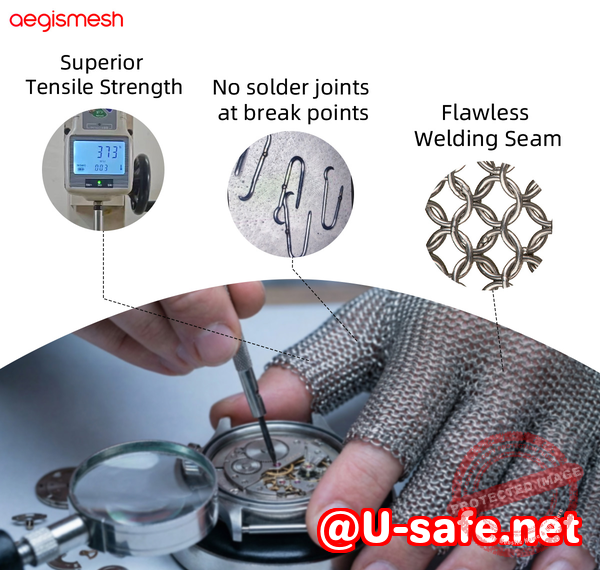
One of the most common problems is distinguishing welded rings from open rings. Welded rings are stronger, which is crucial for protective chainmail in industrial settings. On the other hand, open rings are less durable and prone to coming apart with minimal stress. The issue arises when low-quality manufacturers sell open-ring chainmail as welded, leaving buyers vulnerable to weak protection.
-
Stainless Steel Grades
Not all stainless steel is created equal. Many products are made from 304 stainless steel, which is corrosion-resistant but doesn’t offer the same level of durability as 316 stainless steel. The latter is better suited for industrial applications where corrosion is a concern, such as food processing or harsh environments.
-
Weak Weaves
The weave pattern of chainmail is a critical factor in its strength and durability. Weaves like European 4-in-1 are common in high-quality products and provide an excellent balance of flexibility and protection. A weak weave can leave the chainmail vulnerable to tearing and wear, especially under stress.
How to Inspect Chainmail Quality
At Aegimesh, we believe that anyone can become a savvy buyer with the right knowledge. Below, I’ll explain how to evaluate chainmail based on these critical factors and how to identify the best quality products.
1. Check the Material Type: 304 vs. 316 Stainless Steel
The first step is understanding the material. Stainless steel is a popular choice for chainmail due to its resistance to rust and corrosion. However, not all stainless steel is the same.
-
304 Stainless Steel: This is a more common and cost-effective option. While it’s durable and resistant to corrosion in most environments, it can wear down quicker when exposed to certain harsh conditions.
-
316 Stainless Steel: This grade offers superior corrosion resistance, making it ideal for use in food processing or other environments with high humidity or exposure to chemicals. While it might cost a little more, it’s well worth it for industrial applications.
If you’re buying chainmail for use in an industrial environment, make sure the product uses 316 stainless steel. For decorative purposes or cosplay, 304 stainless steel is usually sufficient.
2. Inspect the Rings: Welded or Open?
The next thing to check is the rings themselves. High-quality chainmail should feature welded rings rather than open ones. Here’s why:
-
Welded Rings: These rings are fused together at the edges, creating a strong, permanent connection. This is essential for protective chainmail, especially in industrial settings where it needs to endure physical stress.
-
Open Rings: Open rings are simply bent into a circle without being fused. While they might look good for decorative pieces, they are not nearly as durable or protective.
You can usually tell whether the rings are welded or open by inspecting the ends closely. Welded rings will have a small but visible seam, while open rings will appear to be “broken” or “open-ended.”
3. Evaluate the Ring Thickness and Inner Diameter
The thickness of the wire and the inner diameter of the rings are also important indicators of quality. A thick wire and smaller inner diameter are typically signs of strong, durable chainmail.
-
Wire Thickness: Thicker wires generally mean stronger chainmail. If you’re buying for industrial use or cut protection, look for chainmail made with thicker wire for enhanced strength.
-
Inner Diameter: The inner diameter of the rings should be small enough that the weave is tight and secure but large enough to maintain flexibility. An overly large diameter can create gaps in the weave, weakening the structure.
4. Inspect the Weave Pattern
The weave pattern plays a critical role in the strength of the chainmail. The most common and durable weave is European 4-in-1, where each ring is linked to four others in a balanced, uniform pattern. This weave offers excellent protection and flexibility, which is essential for applications like food handling and industrial use.
Look closely at the weave to ensure it’s consistent and tight. If you notice gaps or irregularities, it could indicate poor craftsmanship and a lower-quality product.
5. Test for Durability: The Pull Test
One of the simplest yet most effective ways to test chainmail is the pull test. To perform it, grip a section of the chainmail and pull it in opposite directions. High-quality chainmail should feel solid and resist being pulled apart. If the rings shift, bend, or separate, then you’ve likely found a weak spot in the construction.
Why Proper Chainmail Inspection Matters
By following the inspection methods outlined above, you’ll be able to:
-
Avoid Unsafe Chainmail: For industrial or food processing use, low-quality chainmail can pose serious safety risks, especially if the rings break or the material corrodes quickly.
-
Ensure Durability: Investing in high-quality chainmail ensures that you’ll get the protection and longevity you need, whether you’re using it for industrial purposes or historical re-enactments.
-
Save Money: While high-quality chainmail might cost a bit more upfront, it will save you money in the long run by lasting longer and providing better performance.
Conclusion
When it comes to purchasing chainmail, a little knowledge goes a long way. I highly recommend taking the time to inspect the product based on the material, ring construction, wire thickness, inner diameter, and weave pattern. Following these steps will ensure that you purchase chainmail that meets safety and durability standards.
Ready to start shopping? Check out our detailed chainmail inspection guide today and learn how to identify high-quality chainmail products. You can trust Aegimesh to provide expert guidance and high-quality chainmail for any need.
Learn more about identifying high-quality chainmail products: Aegimesh Chainmail Inspection Guide
Frequently Asked Questions (FAQ)
1. How can I tell if a chainmail ring is welded or open?
Inspect the ring closely. Welded rings will have a visible seam where the edges meet, while open rings will appear “broken” with no visible seam.
2. Which stainless steel grade is best for long-lasting chainmail?
For industrial or food-processing applications, 316 stainless steel is the best choice for its superior corrosion resistance. For decorative purposes, 304 stainless steel will suffice.
3. How do I inspect the weave pattern for strength?
Look for a consistent, tight pattern like European 4-in-1, where each ring is interlinked with four others. Gaps or irregularities indicate poor craftsmanship.
4. What are the signs of low-quality or unsafe chainmail?
Look for poorly welded rings, inconsistent weave patterns, thin wire, and excessive gaps. These indicate low-quality or unsafe chainmail.
5. Can decorative chainmail be used for protective purposes?
Decorative chainmail is usually made with open rings and thinner wire, which means it lacks the durability needed for protective use.
6. How do I choose the right chainmail for industrial vs. cosplay use?
For industrial use, opt for 316 stainless steel with welded rings, thick wire, and a tight, strong weave. For cosplay or decorative purposes, 304 stainless steel may be fine.
Keywords:
-
chainmail quality
-
welded rings
-
stainless steel chainmail
-
cut-resistant chainmail
-
chainmail inspection
-
European 4-in-1 weave
-
chainmail durability




 한국어
한국어  Русский
  Deutsch
  العربية