


Ring Mesh and Mesh Boning Aprons Safety and Style Combined
Ring Mesh and Mesh Boning Aprons: Safety and Style Combined
When it comes to purchasing chainmail for industrial protection, cosplay, or historical replicas, the decision isn’t always straightforward. As someone who has spent plenty of time evaluating chainmail products, I know that one of the most common questions is, “How can I be sure I’m buying high-quality chainmail?” Whether you’re looking for a protective apron for your kitchen or a stylish costume for your next cosplay event, understanding how to evaluate the true quality of chainmail is essential.
In this article, I’m going to walk you through the process of identifying high-quality chainmail products, ensuring you make a safe, durable purchase that won’t leave you disappointed. I’ll cover key factors like welded rings versus open rings, stainless steel grades, and how to inspect the weave patterns to make sure you’re getting what you pay for. Let’s dive into how you can confidently evaluate chainmail products before buying.
The Challenge of Identifying Quality Chainmail
If you’ve ever been in the market for chainmail, you’ve probably noticed that not all products are created equal. In fact, the sheer number of options out there can make it tough to distinguish between high-quality, industrial-grade chainmail and low-quality, decorative imitations.
I’ve seen countless people struggle with this, whether they’re looking for chainmail to protect themselves while handling knives in a restaurant, wanting a reliable costume for a medieval fair, or seeking something historically accurate for a collector’s item. The truth is, even though chainmail may look impressive at first glance, it’s often the finer details that determine its overall quality, durability, and safety.
Pain Points When Evaluating Chainmail
Here are some of the most common pain points I’ve encountered when helping people shop for chainmail, along with how to solve them:
1. Distinguishing Between Welded and Open Rings
It can be challenging to tell whether a chainmail product is made with welded rings (stronger and more durable) or open rings (more prone to breaking). This is crucial when you need the chainmail to perform a specific function like cut resistance in an industrial setting.
2. Uncertainty About Stainless Steel Grades
Not all stainless steel is created equal. For chainmail, two common grades are 304 and 316, but how do you know which is the best choice? The grade impacts the material’s corrosion resistance, which is especially important in industries like food processing.
3. Weak or Inconsistent Weaves
A poor weave can significantly reduce the strength of the chainmail. If the rings aren’t woven tightly or in the right pattern, the chainmail may not offer the protection you need. For instance, the popular European 4-in-1 weave is one of the strongest and most durable weaves available.
How to Inspect and Verify Chainmail Quality
Let’s break down the inspection process so you can evaluate any chainmail product, whether you’re a collector, an industrial user, or a cosplayer.
1. Material Type 304 vs 316 Stainless Steel
Start by checking what the chainmail is made of. The two most common stainless steel grades used in chainmail are 304 and 316. Here’s a quick guide:
-
304 Stainless Steel: This is the most commonly used steel for general applications. It’s corrosion-resistant and durable, but not ideal for high-corrosion environments like food handling.
-
316 Stainless Steel: This is a higher-grade steel, resistant to corrosion from saltwater and acids, making it perfect for industries like food processing or maritime environments.
If you’re looking for industrial protection or something that will endure tough conditions, I highly recommend choosing 316 stainless steel.
2. Ring Welding Welded vs. Open Rings
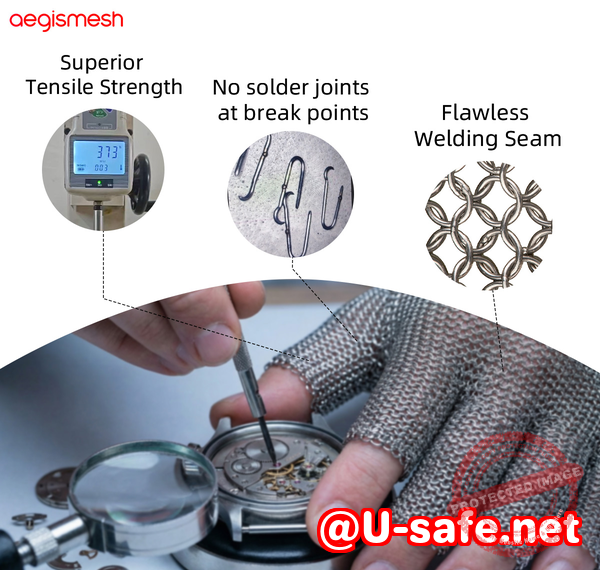
One of the easiest ways to test the quality of your chainmail is to check the rings. High-quality chainmail will use welded rings, where the ends of the ring are fused together to create a permanent bond. Open rings, on the other hand, are weaker and may break apart over time.
How to tell the difference?
-
Welded rings: Smooth, uniform finish where the ring ends meet.
-
Open rings: Rough edges and a visible gap where the ends don’t touch.
If you’re using the chainmail for industrial purposes or anything requiring durability, always opt for welded rings.
3. Ring Thickness and Inner Diameter
The thickness of the wire and the inner diameter of the rings are two more important factors to assess. The wire thickness should be sturdy enough to withstand cuts or abrasions. As a general rule:
-
Thicker wire = more strength and durability.
-
Larger inner diameter = looser, weaker weave.
When evaluating chainmail, make sure the rings feel substantial and the inner diameter is not too large for the weave pattern.
4. Weave Patterns European 4-in-1 Weave
The weave pattern plays a critical role in the overall strength of the chainmail. European 4-in-1 is one of the most popular and effective weaves because it provides excellent protection while maintaining flexibility.
Why European 4-in-1?
-
It’s one of the most durable and tightest weaves, offering both strength and flexibility.
-
The rings are woven in a way that prevents gaps, making it less likely for sharp objects to slip through.
When checking the weave, ensure that it is tight, uniform, and even across the entire piece.
Practical Tips for Testing Chainmail Quality
Here are a few more hands-on tips to help you test the chainmail for quality:
1. Pull Test
A simple pull test can help you determine if the rings are properly welded. Give a few rings a tug. If the rings pull apart easily, then the product likely uses open rings, and it may not be durable enough for industrial or protective use.
2. Inspect for Corrosion or Rust
Check the chainmail for any signs of rust or discoloration. While stainless steel is resistant to corrosion, poor-quality steel or manufacturing can result in rust spots or even structural damage.
3. Consider the Use Case
Make sure the chainmail is suitable for your intended use. If it’s for cosplay or display, you don’t need the same level of protection as if you were buying chainmail for industrial use. Always align the type of chainmail with its intended purpose.
Conclusion: Ensuring a Safe, Durable Purchase
In conclusion, the key to buying high-quality chainmail comes down to being thorough with your inspection. By checking the material type, ring welding, wire thickness, and weave patterns, you can ensure that your chainmail meets safety and durability standards. I highly recommend following these steps before making any purchase to avoid low-quality or unsafe products.
Remember, whether you’re looking for industrial-grade cut protection, a historical replica, or a cosplay costume, understanding how to evaluate chainmail will save you money, time, and frustration. If you’re unsure, don’t hesitate to consult a trusted guide, like the one we’ve provided here at Aegimesh, for additional help.
To learn more about identifying high-quality chainmail products, visit Aegimesh today and check out our detailed chainmail inspection guide.
Frequently Asked Questions
1. How can I tell if a chainmail ring is welded or open?
To tell the difference, simply look at the edges of the rings. Welded rings will have smooth, fused edges, while open rings will have a visible gap between the ends.
2. Which stainless steel grade is best for long-lasting chainmail?
For durability and corrosion resistance, 316 stainless steel is the best choice, especially in environments with moisture or chemicals. 304 is also common but less resistant to corrosion.
3. How do I inspect the weave pattern for strength?
Look for a tight, consistent weave pattern like European 4-in-1. This pattern is durable and won’t easily let sharp objects through.
4. What are the signs of low-quality or unsafe chainmail?
Signs of low-quality chainmail include rust, weak or broken rings, inconsistent weave patterns, and flimsy wire thickness.
5. Can decorative chainmail be used for protective purposes?
While decorative chainmail may look attractive, it may not offer the same level of protection as industrial-grade chainmail. Always check for welded rings and a sturdy weave if you need protection.
6. How do I choose the right chainmail for industrial vs cosplay use?
For industrial use, look for chainmail made of 316 stainless steel with a tight European 4-in-1 weave. For cosplay, you can opt for decorative chainmail, but make sure it still has solid construction.
7. Is chainmail safe for food handling?
Yes, chainmail is often used in the food industry for cut protection, but ensure it’s made from high-quality materials like 316 stainless steel and is free from corrosion.
Tags or Keywords
-
Chainmail quality, welded rings, stainless steel chainmail, cut-resistant chainmail, chainmail inspection, European 4-in-1 weave




 한국어
한국어  Русский
  Deutsch
  العربية