


Chainmail Aprons in Meat Processing Full-Body Safety Explained
Chainmail Aprons in Meat Processing Full-Body Safety Explained
When it comes to ensuring safety in environments like meat processing, chainmail aprons are an essential piece of protective gear. If you’ve ever worked in or around a butcher’s shop, you know that cut-resistant safety isn’t just a luxuryit’s a necessity. But here’s the thing: not all chainmail aprons are created equal, and choosing the right one can feel like a challenge.
I’ve often heard from buyers, collectors, and even industrial workers who are confused about how to tell the difference between high-quality and low-quality chainmail. Whether you’re purchasing for industrial use, a food processing facility, or even for cosplay, understanding the signs of durability, safety, and craftsmanship is critical. In this article, I’m going to walk you through how to evaluate chainmail, specifically focusing on full-body aprons used in meat processing.
Why Quality Matters in Meat Processing
Imagine a butcher working in a high-speed environment with sharp knives and industrial-grade slicers. One wrong move, and a cut can be serious, if not life-threatening. That’s why chainmail aprons are usedbecause they can absorb the impact of a blade and keep workers safe. But here’s the problem: many consumers make the mistake of assuming that all chainmail is built the same way. In reality, poor-quality chainmail may fail to provide the protection needed in these critical situations. Let’s break down what makes chainmail truly protective and how to ensure you’re purchasing the best.
The Pain Points of Choosing Chainmail
Let’s talk about some common problems that many buyers face when selecting chainmail, especially for industrial or food-processing purposes:
1. Welded Rings vs Open Rings
One of the biggest issues with chainmail is distinguishing between welded rings and open rings. When you buy a low-quality apron, you might get a design where the rings are simply interlocked and not welded. Over time, these rings can loosen or break, leading to gaps in protection.
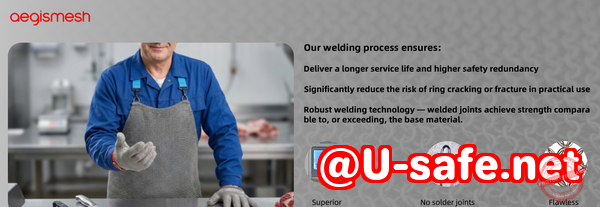
Welded rings, on the other hand, are much more durable. The welding process ensures that the rings stay securely in place, even under intense stress. This is especially important in a meat processing environment, where safety is crucial.
2. Material Selection: Stainless Steel Quality
Not all stainless steel is the same, and choosing the wrong type can compromise the durability of your chainmail apron. Most industrial-grade chainmail is made from either 304 or 316 stainless steel. So, what’s the difference?
-
304 Stainless Steel is generally the more common choice for decorative chainmail or lighter industrial use. It’s resistant to corrosion but isn’t as strong as 316 stainless steel.
-
316 Stainless Steel, often referred to as marine-grade steel, is much more durable and resistant to corrosion, especially in harsh environments like food processing, where constant exposure to water, acids, and salt is common.
When you’re buying chainmail for meat processing, you definitely want to opt for 316 stainless steel to ensure the highest level of protection.
3. Weak Weaves and Poor Craftsmanship
Another major issue with lower-quality chainmail is the weave pattern. A well-constructed chainmail apron uses a strong, consistent weave, like the European 4-in-1 weave. This particular pattern, where each ring is connected to four others, provides maximum strength and flexibility.
Poor craftsmanship can lead to inconsistent weaves, where the rings may be loosely interwoven, or the apron may have weak spots that are prone to tearing or breaking under pressure. This is a major concern in industrial settings where a single mistake can result in injury.
How to Inspect Chainmail Quality
Now that we’ve covered the most common pain points, let’s dive into how you can evaluate chainmail for quality. These practical steps will help you make an informed decision when purchasing chainmail, whether it’s for industrial use, food processing, or any other purpose.
1. Check for Welded Rings
As I mentioned earlier, welded rings are a must for durability and safety. To check, simply examine the rings. If the ends of the rings are smooth and appear to have been fused together, you’re looking at welded rings. If the ends are jagged or you can see the seams, it’s likely an open ring construction.
2. Examine the Stainless Steel Grade
Inspecting the material is key. Look for any markings on the chainmail to determine if it’s made from 304 or 316 stainless steel. High-quality manufacturers will usually include this information. If it’s not stated, don’t hesitate to ask the seller. Remember, for meat processing or industrial use, 316 stainless steel is the best choice.
3. Ring Thickness and Inner Diameter
The thickness of the wire and the inner diameter of the rings are also important factors. Thicker wires and smaller diameters typically offer greater resistance to cutting, but they can make the apron heavier. It’s a balancing act between strength and comfort.
Use your hands to feel the wire thickness. It should feel solid and sturdy, not flimsy or bendable. The rings should not be so large that they create gaps, and the weave should be tightly interlinked.
4. Evaluate the Weave Pattern
The weave pattern is crucial for ensuring the apron provides enough coverage and strength. The European 4-in-1 weave is one of the most common and reliable weaves. Each ring is connected to four other rings, forming a dense and durable network. If you can see the pattern clearly, it’s a good sign of quality.
Check the flexibility of the apron as well. High-quality chainmail should be flexible enough to allow ease of movement, but also stiff enough to offer solid protection.
5. Conduct a Pull Test
A simple pull test can help you determine the strength of the chainmail. Gently tug on the rings to see if any of them come loose. If you notice any movement or loose rings, this is a clear sign that the chainmail is not well-constructed and should be avoided.
6. Look for Signs of Corrosion
Corrosion can weaken chainmail, especially in food processing environments. To check for corrosion, look for any rust spots or discolored rings. Stainless steel is resistant to corrosion, but low-quality steel may still show signs of rust after being exposed to moisture.
Practical Tips for Purchasing High-Quality Chainmail
Here are some practical tips to help you make sure you’re buying top-notch chainmail:
-
Do Your Research: Know the brand, and read reviews or testimonials from other buyers. A reputable manufacturer like Aegimesh offers detailed inspection guides to ensure you’re getting a quality product.
-
Ask About the Material: Always confirm that the chainmail is made from high-quality stainless steel, preferably 316 for industrial and food use.
-
Understand the Intended Use: Whether you need chainmail for industrial protection or cosplay, make sure it’s designed for that specific purpose.
-
Inspect Before Purchase: Whenever possible, physically inspect the product before buying, especially if you’re purchasing in person.
Conclusion
When buying chainmail, whether it’s for meat processing, cosplay, or any other use, it’s essential to follow these inspection steps to ensure you’re purchasing high-quality, durable, and safe products. By checking for welded rings, the correct stainless steel grade, proper weave patterns, and wire thickness, you’ll be able to confidently choose the right chainmail for your needs.
I highly recommend following these steps to ensure any chainmail purchase meets safety and durability standards. Don’t waste your hard-earned money on subpar productstake the time to evaluate quality, and you’ll be rewarded with long-lasting protection.
Learn more about identifying high-quality chainmail products: https://www.aegimesh.com/
Check out our detailed chainmail inspection guide today!
FAQ
1. How can I tell if a chainmail ring is welded or open?
Look for smooth, fused ends on the rings. If the ends appear jagged or there’s a visible seam, it’s an open ring. Welded rings are much stronger and more reliable.
2. Which stainless steel grade is best for long-lasting chainmail?
For durability and corrosion resistance, especially in food processing or industrial environments, 316 stainless steel is the best choice.
3. How do I inspect the weave pattern for strength?
Look for the European 4-in-1 weave, where each ring is connected to four others. This pattern is known for providing maximum strength and flexibility.
4. What are the signs of low-quality or unsafe chainmail?
Signs include loose rings, inconsistent weaves, visible corrosion, and flimsy materials. If the chainmail feels too light or weak, it’s probably not up to standard.
5. Can decorative chainmail be used for protective purposes?
While decorative chainmail may look appealing, it is usually made from lighter materials and is not suitable for industrial or protective use. Always opt for industrial-grade chainmail for safety.
6. How do I choose the right chainmail for industrial vs cosplay use?
For industrial use, look for heavy-duty chainmail made from 316 stainless steel with welded rings and strong weaves. For cosplay, decorative chainmail made from lighter materials may be sufficient, but it won’t offer the same level of protection.
7. How do I know if a chainmail apron is the right size?
Make sure the apron covers your full body and allows for adequate movement. The apron should fit comfortably without being too tight or too loose.
Tags or Keywords:
chainmail quality, welded rings, stainless steel chainmail, cut-resistant chainmail, chainmail inspection, European 4-in-1 weave, chainmail durability





 한국어
한국어  Русский
  Deutsch
  العربية