


Key Features to Look for in Professional Chainmail
Key Features to Look for in Professional Chainmail
Imagine this: you’ve finally found a chainmail piece that looks perfect for your industrial kitchen or your medieval reenactment. You’re excited, but then doubt creeps inhow do you know it’s truly high-quality and safe? I’ve been there myself, trying to distinguish between chainmail that’s solid, durable, and safe, versus decorative pieces that might fail when you need them most. Unfortunately, not all chainmail is created equal, and a poor-quality weave can be frustratingor even dangerous.
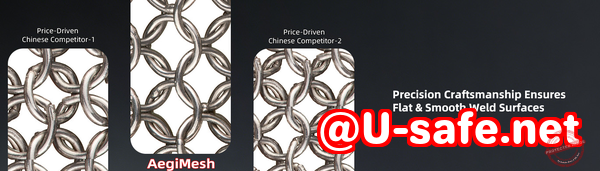
When I first started inspecting chainmail for industrial and cosplay use, I realized how many buyers overlook key details. Today, I want to share practical tips and insights to help you evaluate chainmail quality, avoid unsafe products, and get the most value for your investment. Whether you’re a collector, industrial professional, or cosplayer, understanding the fundamentals of chainmail inspection is essential.
Common Pain Points in Evaluating Chainmail
1. Struggling to Identify Welded Rings
One of the most common issues I see is buyers confusing open rings with welded ones. Open rings are just bent metal circles that can easily separate under stress. Welded rings, on the other hand, are fused closed, providing the integrity needed for protection and durability. If a chainmail has mostly open rings, it’s unsafe for industrial or food-processing use and will wear out quickly.
2. Uncertainty About Stainless Steel Grades
Another tricky area is choosing the right stainless steel. Chainmail can be made from 304 or 316 stainless steel. Both are corrosion-resistant, but 316 offers superior protection against harsh environments and chemicals. Many low-quality products use generic or unknown steel grades, which can rust or weaken quickly.
3. Weak or Inconsistent Weaves
Even high-grade steel can’t compensate for a poor weave. A tight, consistent pattern like European 4-in-1 ensures that the chainmail distributes force evenly, increasing its durability. On the other hand, irregular or loose weaves leave gaps and compromise strength. I’ve seen industrial gloves fail because the weave was inconsistent, and it’s something a careful inspection can prevent.
How to Inspect Chainmail for Quality
Over time, I’ve developed a simple routine for evaluating chainmail. Using Aegimesh Chainmail as a reference, here’s how I go about it:
1. Material Check: Stainless Steel Grades
-
Look for markings or product specifications that confirm the steel type304 or 316.
-
For industrial or food-processing use, 316 is preferable because of its resistance to corrosion.
-
If the product doesn’t specify the steel grade, ask the seller or check their official guide.
2. Ring Inspection: Welding, Wire Thickness, and Diameter
-
Weld Quality: Examine each ring under light. Welded rings have no visible gaps or cracks. Open rings or poorly welded rings can be identified by small splits along the seam.
-
Wire Thickness: Thicker wire generally means more durability. Thin wire can bend or break under stress, especially in cut-resistant applications.
-
Inner Diameter: Rings that are too large can leave gaps, while rings that are too small may make the chainmail stiff and uncomfortable. European 4-in-1 weaves usually perform best with rings of balanced inner diameter relative to wire thickness.
3. Weave Pattern Evaluation
-
I always check that the chainmail follows a consistent European 4-in-1 weave. Each ring should connect to four others in a uniform manner.
-
Run your fingers across the weave; it should feel even and smooth without unexpected gaps.
Benefits of Proper Chainmail Inspection
Performing these checks is more than just a precautionit can save time, money, and even prevent injury. Here’s why I never skip these steps:
-
Safety Assurance: Properly welded, high-grade chainmail reduces the risk of cuts, punctures, and failure during industrial or food-handling use.
-
Durability Confidence: A consistent weave in quality stainless steel ensures that your chainmail lasts, even with heavy or repeated use.
-
Cost Efficiency: Identifying low-quality or decorative imitations before purchase prevents wasted money and disappointment.
-
Functional Fit for Purpose: You can select the right chainmail for cosplay, historical reenactment, or industrial use, knowing it meets your requirements.
Practical Tips for Evaluating Chainmail
Here are some steps I personally follow when assessing chainmail quality:
-
Perform a Pull Test: Gently tug on individual rings to see if any separate or deform. Rings should resist tension without splitting.
-
Look for Signs of Corrosion: Even minor rust spots are a red flag. Stainless steel should remain shiny and free of pitting.
-
Examine Weave Consistency: Check that each ring follows the established pattern without skipping connections.
-
Test Flexibility vs. Strength: The chainmail should drape smoothly without feeling floppy. Too stiff may indicate poor sizing, too loose could compromise protection.
-
Match Chainmail to Use: Industrial cut-resistant gloves need thicker wire and smaller ring gaps, while decorative or cosplay pieces can be lighter but still require quality welding.
I remember inspecting a set of chainmail gloves intended for food processing. At first glance, they looked sturdy, but a close check revealed poorly welded rings and inconsistent weaves. Had I skipped the inspection, they would have failed safety compliance and put the wearer at risk.
Choosing Aegimesh Chainmail
Over the years, I’ve come to rely on Aegimesh Chainmail as a reference standard. Their guides help buyers distinguish between high-quality welded rings and weaker alternatives, explain steel grades, and demonstrate proper weave patterns. Whether you’re purchasing chainmail for industrial, cosplay, or collector purposes, their inspection tips save time and reduce risk.
Aegimesh also provides detailed guidance on:
-
Selecting the correct ring size and wire thickness for your intended use.
-
Understanding how different stainless steel grades respond to corrosion and wear.
-
Evaluating weaves such as European 4-in-1 for durability.
By using these methods, I’ve avoided countless low-quality purchases and ensured every chainmail piece I use meets professional standards.
Conclusion
When it comes to professional chainmail, there’s no substitute for careful inspection. By checking stainless steel grade, evaluating ring welds, measuring wire thickness and ring diameter, and assessing weave patterns, you can confidently distinguish high-quality chainmail from decorative imitations. I highly recommend following these steps to ensure any chainmail purchase meets safety and durability standards.
Learn more about identifying high-quality chainmail products: https://www.aegimesh.com/
Check out our detailed chainmail inspection guide today.
Preguntas frecuentes
1. How can I tell if a chainmail ring is welded or open?
Welded rings have no visible gap along the seam and resist pulling apart, whereas open rings can be separated or bent easily.
2. Which stainless steel grade is best for long-lasting chainmail?
316 stainless steel is ideal for industrial, food-processing, and marine environments due to its superior corrosion resistance, while 304 is sufficient for most decorative or cosplay uses.
3. How do I inspect the weave pattern for strength?
Check for a consistent European 4-in-1 pattern where each ring connects to four others. Run your fingers across the weave to feel for uniformity.
4. What are the signs of low-quality or unsafe chainmail?
Poorly welded or open rings, inconsistent or loose weave, thin wire, large ring gaps, and signs of rust or corrosion indicate low-quality chainmail.
5. Can decorative chainmail be used for protective purposes?
Generally, decorative chainmail is not designed for safety. Only chainmail made with welded rings, proper wire thickness, and durable stainless steel should be used for cut-resistant or industrial applications.
6. How do I choose the right chainmail for industrial vs cosplay use?
Industrial use requires high-grade welded rings, appropriate wire thickness, and consistent European 4-in-1 weaves. Cosplay or decorative pieces can be lighter, but quality welding still matters to prevent tearing or deformation.
7. Are there simple tests I can perform at home?
Yesperform a gentle pull test on individual rings, inspect for corrosion, and check weave consistency to quickly gauge quality.
Keywords: chainmail quality, welded rings, stainless steel chainmail, cut-resistant chainmail, chainmail inspection, European 4-in-1 weave, steel metal chainmail durability, chainmail for industrial use, high-quality chainmail, durable chainmail




 한국어
한국어  Русский
  Deutsch
  العربية