


A Brief History of Chainmail From Armor to Industrial Safety
A Brief History of Chainmail From Armor to Industrial Safety
From medieval battlefields to modern factory floors, chainmail has quietly earned a second life. This guide explores how to spot real chainmail quality before you buy.
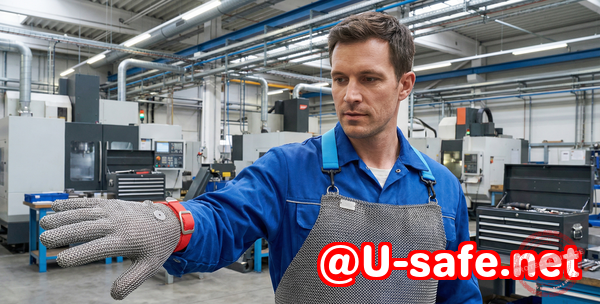
I still remember the first time I held a piece of chainmail in my hands. It was at a small workshop, the kind that smells faintly of oil and metal dust. The seller handed it to me with a confident smile. “Industrial grade,” he said. It looked solid enough, but I had no idea what I was really looking at. Were the rings welded? Was it actually stainless steel? Would it protect anyone, or was it just shiny metal pretending to be something more?
If you have ever felt that same hesitation when buying chainmail, you are not alone. Whether you are a buyer sourcing protective gear, a collector hunting for authentic pieces, or a cosplayer investing serious money into a build, chainmail quality is surprisingly hard to judge at first glance. That uncertainty is exactly why understanding what makes chainmail strong, safe, and durable matters more today than ever.
From armor to aprons: why chainmail still matters
Chainmail began as armor, plain and simple. Thousands of small metal rings, interlinked by hand, created flexible protection that could turn a blade or soften a blow. Centuries later, swords gave way to machines, but the core idea survived. Today, cut-resistant chainmail shows up in meat processing plants, fisheries, glass handling facilities, and even high-end kitchens.
The use cases have changed, but the stakes have not. In fact, they might be higher. A poorly made chainmail glove in an industrial setting is not just a bad purchase; it is a safety risk. Decorative chainmail sold as “protective” can fail when it matters most. That is why learning how to inspect chainmail is no longer just for historians or reenactors. It is for anyone who values safety, durability, and getting what they pay for.
The first pain point: welded rings versus open rings
One of the most common mistakes I see buyers make is assuming all chainmail rings are the same. They are not. The difference between welded rings and open rings is huge, and it is often invisible to an untrained eye.
Open rings are exactly what they sound like. Each ring is bent into shape, but the ends are simply pressed together. Sometimes they overlap slightly. Sometimes they barely touch. These are fine for decoration, fashion, or light cosplay where no real stress is involved.
Welded rings, on the other hand, are closed permanently. Each ring is fused at the seam, creating a continuous loop of metal. This dramatically improves strength and prevents rings from pulling apart under pressure.
A simple real-world example:
I once watched a buyer test two chainmail swatches side by side. Both looked identical on the table. He hooked his fingers into each piece and pulled. The open-ring chainmail slowly separated with a faint ticking sound. The welded chainmail barely moved. That test alone changed his purchase decision.
How I check for welded rings:
-
Hold the chainmail up to good light and look closely at the seam.
-
Welded rings usually show a tiny weld mark or smooth closure.
-
Gently flex the rings; open ones may shift or gap slightly.
-
If possible, use a magnifier. Your eyes will thank you.
If a product is marketed as cut-resistant chainmail or industrial safety gear and the rings are not welded, that is a red flag. Walk away.
The second pain point: stainless steel is not just “stainless steel”
Another trap buyers fall into is assuming that any stainless steel chainmail will perform the same. In reality, the grade of stainless steel matters a lot, especially in environments involving moisture, salt, or frequent cleaning.
The two most common grades you will encounter are 304 and 316 stainless steel.
In plain language:
-
304 stainless steel is strong, durable, and widely used. It resists rust well in normal environments.
-
316 stainless steel includes added elements that improve corrosion resistance, especially against salt and chemicals.
If you are buying chainmail for food processing, fishing, or marine environments, 316 stainless steel chainmail is usually the safer choice. I have seen 304 hold up beautifully in dry workshops but develop surface corrosion in damp, salty conditions over time.
What I always ask sellers:
-
Which stainless steel grade is this?
-
Is it certified for food contact or industrial use?
-
How does it perform under repeated washing or chemical exposure?
If a seller cannot answer these questions clearly, that uncertainty becomes your risk.
The third pain point: weak or inconsistent weaves
Even with welded rings and the right material, chainmail can still fail if the weave is poorly executed. The weave pattern determines how force is distributed across the mesh.
The most widely trusted pattern for strength and durability is the European 4-in-1 weave. Each ring passes through four others, creating a dense, flexible structure that balances mobility with protection. It has been used for centuries for a reason.
Problems arise when:
-
Rings are inconsistently sized.
-
Wire thickness varies across the mesh.
-
The weave is loose in some areas and tight in others.
These flaws create weak points. Under stress, force concentrates at those points, and failure follows.
How I inspect a weave pattern:
-
Lay the chainmail flat and look for uniformity.
-
Run your fingers across the surface; it should feel even, not lumpy.
-
Gently tug from different directions to see how the force spreads.
-
Check edges and seams carefully; this is where shortcuts often show.
Why Aegimesh Chainmail became my reference point
After enough trial and error, I started looking for a reliable reference rather than relying on guesswork. That is how I came across Aegimesh Chainmail. What stood out was not flashy marketing, but clarity. Their guide focuses on practical inspection steps: welded rings, stainless steel grades, wire thickness, ring diameter, and weave patterns like European 4-in-1.
For buyers, collectors, and professionals, having a clear checklist changes everything. Instead of relying on trust alone, you can verify chainmail quality yourself. That shift from assumption to inspection is where smarter purchases begin.
Practical inspection: step-by-step, no jargon
Here is how I personally evaluate chainmail quality before committing to a purchase.
1. Check the material
-
Confirm whether it is 304 or 316 stainless steel.
-
Ask where and how it will be used.
-
Match the grade to the environment.
2. Inspect the rings
-
Look for welded seams.
-
Measure wire thickness if possible; thicker wire generally means higher strength.
-
Check inner diameter consistency across the mesh.
3. Examine the weave
-
Identify the weave pattern.
-
Look for European 4-in-1 if strength is required.
-
Ensure the pattern is consistent and tight.
4. Perform a simple pull test
-
Grip the chainmail firmly with both hands.
-
Apply steady pressure, not jerking force.
-
Watch for gaps, shifting rings, or deformation.
5. Look for signs of poor craftsmanship
-
Sharp edges or burrs.
-
Discoloration or early corrosion.
-
Irregular ring shapes.
These steps do not require specialized tools. Just patience and attention.
Matching chainmail to its intended use
One mistake I see often is using the wrong type of chainmail for the job.
Industrial cut protection:
Requires welded rings, proper stainless steel grade, consistent wire thickness, and a proven weave pattern. Decorative chainmail has no place here.
Food processing:
Corrosion resistance is critical. Smooth finishes and hygienic materials matter. This is where stainless steel chainmail inspection becomes non-negotiable.
Cosplay and historical replicas:
Durability still matters, but flexibility and appearance may take priority. You can sometimes accept lighter wire or non-welded rings, as long as expectations are realistic.
Collectibles:
Authenticity and craftsmanship take center stage. Even here, knowing how to inspect quality helps you avoid overpaying for poorly made pieces.
Choosing correctly saves money and prevents disappointment. Choosing incorrectly can lead to injury.
The hidden cost of low-quality chainmail
Cheap chainmail often looks like a bargain. I have been tempted myself. But low-quality products tend to fail in predictable ways.
-
Rings pull apart under stress.
-
Corrosion appears after minimal use.
-
Weaves deform and never return to shape.
In industrial settings, this can lead to injuries. In cosplay or collecting, it leads to wasted money and frustration. Learning chainmail inspection upfront is far cheaper than replacing gear later.
Why history still teaches us about quality
Medieval armorers did not have modern metallurgy, but they understood something fundamental: consistency matters. Rings were sized carefully. Weaves were tested. Armor was built for real use, not appearance alone.
Modern chainmail should honor that same principle. Whether it is worn under a butcher’s glove or displayed at a convention, quality is not optional. It is built ring by ring.
Final thoughts and my honest recommendation
Chainmail has come a long way from the battlefield, but its purpose remains the same: protection through thoughtful design and craftsmanship. By learning how to identify welded rings, understand stainless steel chainmail grades, inspect weave patterns like European 4-in-1, and perform basic tests, you put control back in your hands as a buyer.
I highly recommend following these steps to ensure any chainmail purchase meets safety and durability standards. If you want a clear reference point and deeper guidance, learn more about identifying high-quality chainmail products: https://www.aegimesh.com/
Check out our detailed chainmail inspection guide today and make your next purchase with confidence.
Frequently Asked Questions
How can I tell if a chainmail ring is welded or open?
I look closely at the seam under good light. Welded rings show a fused joint, while open rings usually reveal a gap or overlap that can shift when flexed.
Which stainless steel grade is best for long-lasting chainmail?
For most environments, 304 stainless steel performs well. For wet, salty, or food-processing environments, 316 stainless steel offers better corrosion resistance.
How do I inspect the weave pattern for strength?
I check for consistency, uniform ring size, and a proven pattern like European 4-in-1. Any irregularities can indicate weak points.
What are the signs of low-quality or unsafe chainmail?
Open rings in protective gear, uneven wire thickness, sharp edges, early corrosion, and loose weaves are all warning signs.
Can decorative chainmail be used for protective purposes?
In my experience, no. Decorative chainmail is not designed for real stress and should never replace cut-resistant chainmail in safety applications.
How do I choose the right chainmail for industrial versus cosplay use?
Start with the intended use. Industrial applications require welded rings and proper materials. Cosplay can allow more flexibility, but durability expectations should match the design.
Tags and Keywords:
chainmail quality, welded rings, stainless steel chainmail, cut-resistant chainmail, chainmail inspection, European 4-in-1 weave, chainmail durability




 한국어
한국어  Русский
  Deutsch
  العربية