


Steel Metal Chainmail for Blade Handling Operations
Steel Metal Chainmail for Blade Handling Operations: How to Identify High-Quality Products for Protection and Durability
When shopping for chainmail, whether it’s for a blade handling operation, cosplay, or food processing, it can be difficult to tell the difference between high-quality, durable chainmail and poor imitations that could compromise safety or performance. I’ve been there myselfstanding in front of racks of chainmail, wondering if I’m about to make an investment that’ll hold up or one that’ll break down after a few uses. In this guide, I’ll walk you through how to evaluate chainmail, focusing on the aspects that make all the difference when it comes to safety and durability.
Understanding Chainmail Quality: Common Pitfalls and How to Avoid Them
It doesn’t take long to realize that not all chainmail is created equal. Whether you’re buying it for blade handling, industrial use, cosplay, or a collector’s piece, there are a few common mistakes many of us make when evaluating chainmail. From missing the signs of poor craftsmanship to misunderstanding the materials, here are the top issues to watch for.
1. Difficulty Differentiating Welded Rings from Open Rings
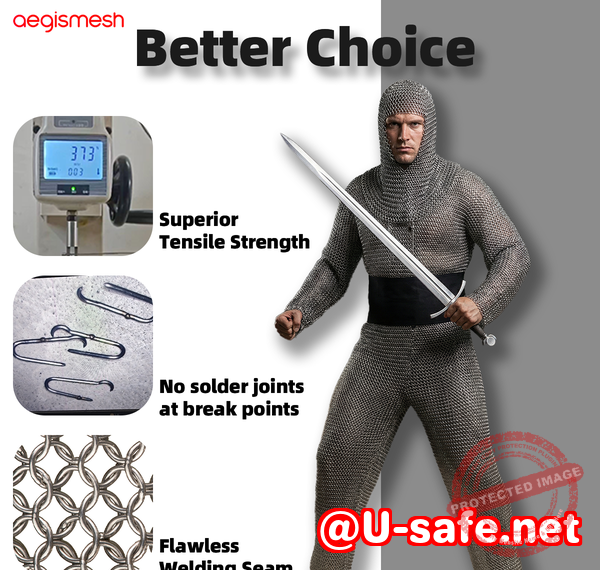
A major issue when purchasing chainmail is distinguishing between welded rings and open rings. Many low-quality chainmail products use open rings, which are less durable and can come apart under stress. If you’re using chainmail for safetylike in a blade handling operation or food processingyou’ll want welded rings for maximum durability and protection.
2. Uncertainty About Stainless Steel Grades and Corrosion Resistance
Not all stainless steel is the same. Chainmail made from 304 stainless steel might seem like a good deal, but it’s prone to rust when exposed to moisture for extended periods. If you’re in an environment where your chainmail will face wet conditions, you’ll want the more corrosion-resistant 316 stainless steel.
3. Weak or Inconsistent Weaves That Could Compromise Durability
The strength of chainmail also depends on its weave pattern. European 4-in-1 is one of the most common, offering excellent protection and durability. But not all weaves are equal, and some may not hold up under strain. If you’re dealing with heavy-duty or professional work, the weave pattern is crucial.
Aegimesh Chainmail: The Ideal Solution for Quality Assurance
At Aegimesh, we’ve created a comprehensive chainmail inspection guide to help buyers, collectors, and professionals evaluate the true quality of any chainmail product. This guide provides a step-by-step process for identifying welded rings, choosing the right stainless steel grade (304 or 316), inspecting wire thickness, checking ring diameters, and assessing weave patterns like European 4-in-1.
How to Inspect and Evaluate the Quality of Chainmail
Let’s break down the key aspects you should consider when inspecting chainmail, whether you’re buying for industrial, cosplay, or decorative purposes.
1. Material Type: 304 vs. 316 Stainless Steel
The material you choose will significantly impact the durability and effectiveness of your chainmail. Here’s a quick breakdown:
-
304 Stainless Steel: The most common grade used in chainmail, suitable for most purposes but can rust in humid or wet environments.
-
316 Stainless Steel: This is the premium option, resistant to rust and corrosion, ideal for use in food processing, industrial environments, or any situation where exposure to moisture is likely.
When inspecting chainmail, always check the grade of the stainless steel. This is particularly important for industrial applications or for items that will see heavy wear and tear.
2. Ring Welding: A Critical Factor in Durability
Not all chainmail is created with the same attention to detail. The type of ring used (welded or open) can make a huge difference in strength and longevity. Open rings, while cheaper, are more likely to break under stress. Welded rings, on the other hand, are much stronger and can handle heavy-duty applications.
To check for welded rings, take a look at the ends of the rings. If the ends are fused together and show no gaps, you’re likely dealing with welded rings. If they’re open, the chainmail is probably of lower quality.
3. Ring Thickness and Inner Diameter
The thickness of the wire and the diameter of the rings are also critical in determining the strength of the chainmail. Too thin, and the links might break under pressure. Too thick, and the chainmail might be uncomfortable or too rigid for its intended use.
A quick test is to try pulling on the rings. High-quality chainmail should resist pulling apart. Additionally, inspecting the inner diameter of the rings can help. For example, a 10mm inner diameter is typical for European 4-in-1 weave, but always check specifications for your intended use.
4. Weave Patterns: European 4-in-1 for Strength
The weave pattern affects both the look and strength of the chainmail. For industrial use, you’ll want to stick to a tight, durable pattern. European 4-in-1 is a common choice because it offers a balance between strength, flexibility, and coverage.
If the weave is loose or inconsistent, the chainmail will lack the protection you need. Be sure to examine the pattern closely to ensure it’s tightly woven and evenly distributed.
Practical Tips for Ensuring Chainmail Quality
Here are a few practical steps I recommend to test the quality of chainmail before making a purchase:
1. Perform a Simple Pull Test
Pulling on the rings of the chainmail is one of the quickest ways to test its durability. If the rings don’t hold together under moderate tension, then the chainmail might not be the best choice for safety or industrial work.
2. Inspect for Corrosion or Poor Craftsmanship
While inspecting, look for signs of rust, corrosion, or defects in the rings. Corrosion can occur if the chainmail was made from lower-grade steel or exposed to moisture. If you spot signs of rust or poor welding, the product might not be the best fit for your needs.
3. Assess the Chainmail’s Intended Use
It’s crucial to select the right chainmail for the job. Chainmail meant for cosplay or decorative purposes may look good but won’t provide the protection necessary for blade handling or food processing. Understanding the specific use case will help you choose the right type of chainmail.
Why Proper Inspection Is Important
Avoiding Unsafe Chainmail: Whether for food handling, blade protection, or industrial work, chainmail needs to provide reliable safety. Improperly welded rings or weak weave patterns could lead to injury or damage.
Ensuring Durability: By understanding the right material, thickness, and weave, you can ensure your chainmail will last, saving you money and avoiding the need for frequent replacements.
Identifying Low-Quality Products: By following these steps, you can avoid falling for cheap imitations that could be hazardous or unsatisfactory.
Conclusion: The Best Way to Choose High-Quality Chainmail
In conclusion, when purchasing chainmail, the key to making a safe, durable investment is knowing how to properly evaluate the product. I highly recommend following the inspection methods I’ve outlined here. Whether you’re buying for blade handling, cosplay, or industrial use, it’s essential to understand the material, welds, weave, and craftsmanship. This way, you can avoid low-quality products and ensure you get something that truly meets your needs.
Learn more about identifying high-quality chainmail products and explore our detailed chainmail inspection guide at Aegimesh.
FAQ
1. How can I tell if a chainmail ring is welded or open?
Welded rings are fused together at the ends, while open rings will have visible gaps. To check, simply look at the ends of the rings and see if they are fully joined.
2. Which stainless steel grade is best for long-lasting chainmail?
For maximum corrosion resistance, 316 stainless steel is ideal. It’s more expensive but offers superior durability, especially in humid or wet conditions.
3. How do I inspect the weave pattern for strength?
Examine the weave for tightness and consistency. A well-constructed European 4-in-1 weave should be even, with no loose or uneven links.
4. What are the signs of low-quality or unsafe chainmail?
Signs include visible corrosion, weak rings, inconsistent weave patterns, or rings that easily separate when pulled.
5. Can decorative chainmail be used for protective purposes?
Decorative chainmail may look nice, but it often lacks the strength and durability required for protective use. Always choose chainmail that’s designed for safety.
6. How do I choose the right chainmail for industrial vs. cosplay use?
For industrial use, prioritize chainmail made from 316 stainless steel with tight, strong weaves like European 4-in-1. For cosplay, you can often use lighter, decorative options, but always ensure it still meets your durability needs.
Tags or Keywords
-
chainmail quality, welded rings, stainless steel chainmail, cut-resistant chainmail, chainmail inspection, European 4-in-1 weave, chainmail durability




 한국어
한국어  Русский
  Deutsch
  العربية