


Understanding the Science Behind Stainless Steel Chainmail Protection
Understanding the Science Behind Stainless Steel Chainmail Protection
When it comes to chainmail, whether you’re in the market for a durable protective solution or searching for an authentic piece for your cosplay or collection, the choices can be overwhelming. How do you know which chainmail is genuinely high-quality and which ones are simply imitations? As someone who’s been on both sides of the buying and collecting process, I’ve had my fair share of struggles.
Just recently, I was in a dilemma about purchasing some chainmail for an industrial application. The market is full of different grades, types, and styles, and I couldn’t help but wonder, “What makes one chainmail product stand out over another?” I knew the importance of getting this right: one wrong purchase could result in inadequate protection, unnecessary expenses, or worse, safety risks. If you’ve found yourself in a similar situation, you’re not alone. Let’s dive into how you can identify the truly high-quality chainmail that will serve you well in a range of usesfrom food processing to cosplay to historical reenactments.
Common Issues When Evaluating Chainmail
1. Welded Rings vs. Open Rings
One of the first hurdles people face is distinguishing between welded and open rings. If you’ve ever picked up a piece of chainmail, you’ve probably noticed that some rings are solid and tightly bonded together, while others may feel loose. Open rings, though visually similar, are less durable. They can come apart with use, compromising the chainmail’s strength and protective abilities. Welded rings, on the other hand, are fused permanently, offering superior strength and longevity.
2. Uncertainty About Material Quality
When shopping for chainmail, particularly stainless steel, you may be confused about which grade of steel is best suited for your needs. You’ll often see terms like “304 stainless steel” or “316 stainless steel” thrown around. But how do you know which one is right for you? Generally, 316 stainless steel is more corrosion-resistant than 304, making it the go-to choice for industrial or food-processing use. If you’re looking for something more decorative or for cosplay, 304 steel might be sufficient, but it can corrode faster in harsh conditions.
3. Weak Weaves or Inconsistent Patterns
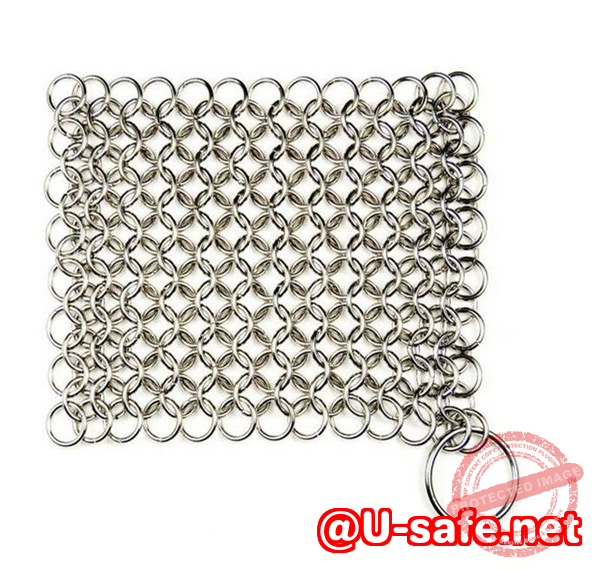
Another issue I’ve encountered is poor weave quality. Chainmail is traditionally woven in specific patterns, such as the European 4-in-1 weave, which ensures the rings interlock in a way that maximizes strength. However, not all chainmail weaves are created equal. A weak or inconsistent weave can lead to breakage and failure of the chainmail when it’s under stress, whether that’s in a combat situation, while processing food, or handling heavy-duty tasks in a work environment.
How Aegimesh Chainmail Can Help
To make sure you’re purchasing the best possible chainmail for your needs, it’s important to understand how to evaluate the quality of the material, the welds, the weave, and even the type of stainless steel used. Here’s a step-by-step guide on how to inspect chainmail and make an informed decision.
Step 1: Check the Material (304 vs. 316 Stainless Steel)
The type of stainless steel used in chainmail can make a huge difference in both its durability and corrosion resistance. Here’s a quick breakdown:
-
304 Stainless Steel: This is the most common grade used in decorative or lightweight chainmail, including cosplay and historical reenactment pieces. While it offers decent strength, it’s more prone to corrosion in high-moisture or high-salt environments.
-
316 Stainless Steel: This is the premium choice for industrial or food-processing chainmail. It offers superior corrosion resistance, making it perfect for environments where the chainmail will be exposed to liquids, acids, or corrosive elements.
If you’re planning to use chainmail for protection in a food-processing setting, or need a product that will withstand years of heavy-duty use, you should always opt for 316 stainless steel.
Step 2: Inspect the Rings for Welding
To ensure your chainmail will stand the test of time, you need to verify that the rings are welded. Open rings are more common in cheaper, decorative chainmail, but they won’t offer the strength and durability you need in professional or protective settings. Here’s how you can tell:
-
Welded Rings: These will have a smooth, solid surface where the ring has been fused. If you look closely, you should not see any gaps or joints in the ring itself.
-
Open Rings: These will typically have a visible gap between the two ends of the ring, which can become wider over time with wear.
Performing a simple pull test on a few rings can help verify their strength. If they easily separate, it’s a clear sign the chainmail is low quality.
Step 3: Evaluate the Ring Thickness and Inner Diameter
Ring thickness and inner diameter (ID) are crucial when it comes to the overall strength of the chainmail. The thickness of the wire affects its durability, while the inner diameter impacts how tightly the rings interlock, which contributes to the overall strength of the weave. Here are some practical tips:
-
Wire Thickness: Heavier gauge wire will naturally provide more protection and durability. Thicker wire also resists bending and breaking, which is essential in high-stress environments like industrial work or food processing.
-
Inner Diameter: Ideally, the ID of the rings should be sized appropriately for the weave pattern. If the rings are too small for the wire, the chainmail will be too tight, reducing flexibility. If they’re too large, the rings won’t interlock properly, weakening the weave.
A quick check of the wire gauge and ID should give you a good indication of how sturdy the chainmail is. If the rings are flimsy or oversized for the weave, it’s not a good sign.
Step 4: Examine the Weave Pattern (European 4-in-1)
The weave pattern is one of the most important indicators of quality. The European 4-in-1 weave is the standard for protective chainmail, offering a strong, reliable structure that can withstand impact and abrasion. To evaluate the quality of the weave:
-
Look for evenness: All the rings should align neatly, and there shouldn’t be any misaligned or improperly connected rings.
-
Check for symmetry: A well-made European 4-in-1 weave will have rings that interlock evenly in a consistent pattern. If the rings seem too loosely connected, or there are gaps in the weave, it’s a sign of poor craftsmanship.
Step 5: Perform a Simple Pull Test
This is one of the easiest ways to check chainmail quality. Gently pull on the rings in different areas to see how much tension they can withstand. If the weave holds firm and no rings come loose or bend out of shape, you can be confident the chainmail is of good quality.
Why It Matters
Choosing the right chainmail isn’t just about getting a stylish piece or a good deal. It’s about ensuring your chainmail serves its intended purpose, whether it’s for industrial cut protection, food handling, cosplay, or as part of a historical display. By performing these simple inspections, you can avoid making costly mistakes and ensure your chainmail investment will last for years to come.
Conclusion: Invest in Quality Chainmail
In summary, when evaluating chainmail, it’s crucial to check the material grade, welds, wire thickness, ring diameters, and the weave pattern. Aegimesh Chainmail provides a comprehensive guide to help you make informed decisions and avoid low-quality purchases.
I highly recommend following these steps to ensure any chainmail purchase meets safety and durability standards. Whether you’re buying for industrial use, cosplay, or collection, quality chainmail will save you money and provide the protection or authenticity you need.
Learn more about identifying high-quality chainmail products:
FAQs
How can I tell if a chainmail ring is welded or open?
-
Look closely at the edges of the ring. If it’s welded, you’ll see no gap, and the ends will be fused smoothly. Open rings will have visible gaps between the ends.
Which stainless steel grade is best for long-lasting chainmail?
-
For durability and corrosion resistance, 316 stainless steel is ideal. It’s perfect for industrial and food-related uses. 304 stainless steel works well for decorative purposes.
How do I inspect the weave pattern for strength?
-
Check that the rings interlock evenly and consistently. A European 4-in-1 weave should show a symmetrical, tight, and well-aligned pattern. Any irregularities indicate poor quality.
What are the signs of low-quality or unsafe chainmail?
-
Signs include loose or inconsistent rings, weak welds, poor weave patterns, and the use of low-grade materials that could corrode or fail under pressure.
Can decorative chainmail be used for protective purposes?
-
It depends on the quality and material. Generally, decorative chainmail made from 304 stainless steel is not suitable for protection. For industrial use, look for chainmail made from 316 stainless steel with welded rings.
How do I choose the right chainmail for industrial vs cosplay use?
-
For industrial use, prioritize 316 stainless steel, welded rings, and a strong weave pattern. For cosplay, 304 stainless steel and decorative weaves may suffice, but ensure the weave is even and the rings are durable enough for the expected use.
Tags/Keywords: chainmail quality, welded rings, stainless steel chainmail, cut-resistant chainmail, chainmail inspection, European 4-in-1 weave




 한국어
한국어  Русский
  Deutsch
  العربية