


Steel Metal Chainmail and Worker Protection Evolution
Steel Metal Chainmail and Worker Protection Evolution
When you’re shopping for chainmail, whether for cosplay, food handling, or industrial protection, it can feel like you’re swimming in a sea of choices. With so many options available, how can you tell which products are genuinely high-quality and which ones are simply decorative? The last thing you want is to spend your hard-earned money on chainmail that doesn’t provide the protection you need or breaks down too quickly.
In this guide, we’ll take a deep dive into how to evaluate the true quality of chainmail, from checking welded rings to inspecting weave patterns and material types. Whether you’re a buyer, collector, or professional user, you’ll walk away with the knowledge needed to make informed, safe purchases. Let’s explore how you can identify quality chainmail that meets your safety standards and avoid costly mistakes.
Why Chainmail Quality Matters
Imagine you’re working in a food-processing plant where workers handle sharp tools or machinery every day. The last thing you want is to trust that your protective gear is going to fail under pressure. On the other hand, you might be putting together an impressive cosplay costume and need to ensure the chainmail not only looks great but can withstand wear and tear.
This is where understanding chainmail quality comes in. Inconsistent weaves, poor materials, or incorrect ring construction can all compromise the protective ability of chainmail. For industrial purposes, low-quality chainmail could even put workers at risk of injury.
Common Pain Points in Chainmail Evaluation
Here are some of the most common challenges people face when trying to evaluate chainmail:
-
Welded Rings vs Open Rings: Not all rings are created equal. Some chains are made with welded rings, while others use open rings, which can be weaker and more prone to breaking.
-
Stainless Steel Grades: Stainless steel chainmail is commonly made from either 304 or 316 grades. If you don’t understand the difference, you might unknowingly choose a product that corrodes faster or isn’t as durable.
-
Weave Strength: The type of weave used can make or break the durability of the chainmail. Weaves like the European 4-in-1 pattern are designed to maximize strength, but other weaves may not offer the same level of protection.
By understanding how to properly evaluate these key factors, you’ll be able to confidently choose chainmail that fits your needs, whether for industrial use, cosplay, or as a collectible.
How to Inspect Chainmail Quality
Let’s break down how to inspect chainmail properly, step by step, to ensure you’re getting the best value for your money.
1. Material Type: 304 vs 316 Stainless Steel
Stainless steel is the most common material used in chainmail, but not all stainless steel is created equal. The two main grades you’ll encounter are 304 and 316.
-
304 Stainless Steel: This is the most commonly used grade and works well for general purposes. It’s highly resistant to corrosion but isn’t ideal for environments with heavy exposure to saltwater or harsh chemicals.
-
316 Stainless Steel: This is a more advanced material that offers better resistance to corrosion, especially in harsh environments like marine settings. If you’re working in a corrosive environment or need chainmail for heavy-duty industrial use, 316 is the better option.
Tip: Always check the product description to ensure you’re getting the right grade for your intended use.
2. Inspecting the Rings: Welded vs Open
One of the most important steps in evaluating chainmail quality is checking whether the rings are welded or open.
-
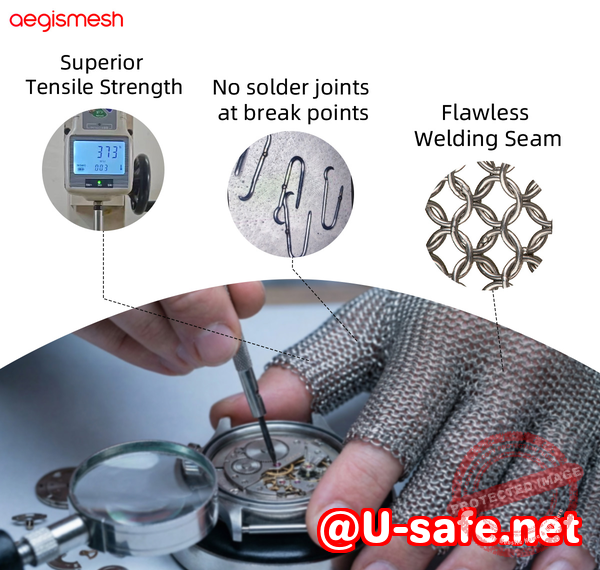
Welded Rings: These are fused together at the seam and are generally much stronger and more durable. They’re ideal for industrial use where strength and protection are crucial.
-
Open Rings: These are simply bent into shape and can easily be pulled apart. While they can look fine for decorative purposes (like cosplay), they aren’t reliable for protection.
How to Test: Gently tug on a few rings. If you can easily open them with little effort, the chainmail isn’t made with welded rings and likely isn’t strong enough for protective use.
3. Wire Thickness & Inner Diameter
Wire thickness and ring diameter both contribute to the durability and overall effectiveness of the chainmail. Thicker wires generally mean stronger chainmail, but the inner diameter of the rings should also be considered.
-
Wire Thickness: Look for chainmail that uses thicker wires for stronger, more durable links. Thin wire can bend and break more easily under stress.
-
Ring Diameter: The inner diameter of the rings affects how tightly the weave can be. A smaller diameter typically provides a more compact, stronger weave. Larger diameters may look nice for decorative purposes but can sacrifice protection.
Quick Check: If you’re unsure about the wire thickness, you can compare it to other chainmail options to see if it feels noticeably stronger or weaker.
4. Evaluating the Weave Pattern
The weave pattern is another important aspect of chainmail quality. A strong, durable weave will help ensure that the chainmail provides the necessary protection.
-
European 4-in-1 Weave: This is one of the most popular weaves used in high-quality chainmail. The pattern involves four rings passing through each individual ring, creating a tight, durable structure. This weave is known for its strength and durability.
-
Other Weaves: There are many different types of weaves, but not all are as strong as the European 4-in-1. Always research the weave pattern to make sure it offers the level of durability you need.
Tip: When inspecting the weave, look for any irregularities or loose rings. A well-made weave will have a uniform structure with no signs of fraying or weakness.
5. Performing a Simple Pull Test
One of the best ways to check the strength of your chainmail is to perform a simple pull test. Gently tug on the edges of the chainmail, especially around areas where rings meet. If any rings come apart or the material feels flimsy, it’s a sign that the chainmail might not be up to standard.
Why It Matters: Pull tests can reveal whether the chainmail has weak spots that could fail under pressure, so it’s an essential part of the inspection process.
Benefits of Proper Chainmail Inspection
Properly inspecting your chainmail before purchasing offers several advantages:
-
Safety: Low-quality chainmail can fail under pressure, leading to serious injuries in industrial settings or food processing environments.
-
Durability: By understanding what makes a chainmail product strong, you can avoid wasting money on items that will break down too quickly.
-
Peace of Mind: With the right chainmail, you’ll know you’re protected whether you’re working with sharp tools, crafting a costume, or collecting a historical piece.
Final Tip: Don’t rush your purchase! Take the time to inspect the material, welds, weave, and wire thickness. It’s worth investing in high-quality chainmail that will stand the test of time.
Conclusion: Make Informed Chainmail Purchases
In summary, evaluating the quality of chainmail requires checking the material type, inspecting the rings, considering wire thickness and ring diameter, and evaluating the weave pattern. By following these steps, you can confidently select chainmail that’s safe, durable, and suited for your specific needs, whether it’s for industrial protection or cosplay.
I highly recommend following these steps to ensure any chainmail purchase meets safety and durability standards. Don’t hesitateensure you’re getting the best quality possible for your needs.
Learn more about identifying high-quality chainmail products: Aegimesh Chainmail Inspection Guide.
FAQ
1. How can I tell if a chainmail ring is welded or open?
Look for welded rings that have been fused at the seam. If the rings can easily be opened by hand, they’re open rings, which are weaker and not suitable for protection.
2. Which stainless steel grade is best for long-lasting chainmail?
Grade 316 stainless steel is more corrosion-resistant than grade 304, making it the better choice for harsh environments or heavy-duty use.
3. How do I inspect the weave pattern for strength?
Look for uniformity in the weave. A European 4-in-1 pattern is typically the strongest and most durable, offering great protection.
4. What are the signs of low-quality or unsafe chainmail?
Weak or inconsistent weaves, rust or corrosion, and open rings are signs of low-quality chainmail that may not provide adequate protection.
5. Can decorative chainmail be used for protective purposes?
Decorative chainmail may look good for cosplay or display, but it’s typically made from open rings or weaker materials and isn’t suitable for protective use.
6. How do I choose the right chainmail for industrial vs cosplay use?
For industrial use, always opt for chainmail with welded rings made from stainless steel grades 304 or 316. For cosplay, you can choose lighter, decorative chainmail, though it won’t offer the same protection.
Keywords:
chainmail quality, welded rings, stainless steel chainmail, cut-resistant chainmail, chainmail inspection, European 4-in-1 weave, chainmail durability




 한국어
한국어  Русский
  Deutsch
  العربية