


Chainmail and Stainless Steel Recycling
Chainmail and Stainless Steel Recycling: How to Ensure Quality and Durability
When shopping for chainmailwhether for protection, cosplay, or as a historical collectiblehow do you know if you’re getting a truly high-quality product? It’s a common struggle: You might find a beautiful piece online, but is it the real deal, or just a cheap imitation? If you’re buying for industrial purposes or even for personal safety, there’s more at stake than just the appearance.
As a buyer, collector, or professional, it’s crucial to understand what makes chainmail durable, safe, and long-lasting. The last thing you want is to invest in a product that doesn’t meet your needs or, worse, puts you at risk. Fortunately, there are a few key indicators to look for when evaluating chainmail quality. Today, I’ll share practical tips for spotting high-quality chainmail and avoiding unsafe or low-quality products.
Common Problems Buyers Face When Evaluating Chainmail
I’ve talked to many people who share a similar frustration: They struggle to tell the difference between high-quality chainmail and poor-quality knock-offs. This isn’t just a cosmetic issueit’s a safety and durability concern, especially for those purchasing chainmail for protective purposes, such as industrial cut resistance or food handling. So, how can you make sure you’re choosing the right chainmail for your needs?
Here are a few common pain points I hear from customers:
-
Welded Rings vs. Open Rings: It can be hard to tell the difference between these two types of rings, but it’s an essential factor in determining chainmail’s strength and longevity.
-
Choosing the Right Stainless Steel: With grades like 304 and 316 available, how do you know which one will stand up to the test of time, especially in corrosive environments or high-stress situations?
-
Weak or Inconsistent Weaves: Some chainmail is poorly constructed, which means the rings aren’t tightly connected, making the weave weak and prone to breaking.
At Aegimesh, we’ve created a guide to help you evaluate the quality of chainmail. With simple inspection methods, you can ensure your purchase meets safety standards and is built to last.
How to Inspect and Verify Chainmail Quality
Evaluating chainmail doesn’t have to be complicated, but it’s essential to do your homework. Here are some practical steps to help you identify high-quality chainmail, no matter your intended use:
1. Material Type: Stainless Steel Grade
The first step in assessing quality is to look at the material. Stainless steel is the most common metal used in chainmail, and not all stainless steel is created equal. The two most common grades are 304 and 316, and each serves a different purpose.
-
304 Stainless Steel: This is the most common grade for general-purpose chainmail. It’s durable and resistant to corrosion, but it’s not the best choice for environments that are extremely wet or exposed to chemicals.
-
316 Stainless Steel: If you’re using chainmail for industrial or marine applications, 316 stainless steel is the better choice. It’s highly resistant to corrosion, making it perfect for food processing environments or high-humidity areas.
When inspecting chainmail, ask the seller about the material. Quality manufacturers like Aegimesh will clearly list the stainless steel grade they use, helping you make an informed decision.
2. Welded Rings vs. Open Rings
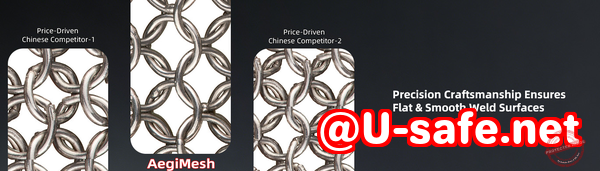
The next thing you should check is the type of rings used in the weave. A lot of chainmail on the market uses open rings, which are simply looped and crimped shut. This creates a weaker link that can break under stress.
On the other hand, welded rings are made by fusing the two ends of each ring together, making them far stronger and more reliable.
To test if the rings are welded, gently try to pull a ring apart. If it’s welded, it should resist any separation. If it’s an open ring, you’ll likely be able to separate the ends, which means the weave is more vulnerable to wear and tear.
3. Ring Thickness and Inner Diameter
The thickness of the wire used in the chainmail rings is another crucial factor in determining quality. Thicker wire makes for a stronger, more durable chainmail. When checking the rings, look for:
-
Wire thickness: A heavier gauge wire means stronger rings.
-
Inner diameter (ID): The ID of the ring should be consistent throughout the piece. A ring that’s too small can cause the weave to be too tight, compromising flexibility and movement. A ring that’s too large can make the weave less stable.
For industrial applications, thicker rings with smaller diameters will offer better protection. For cosplay or historical reenactments, slightly smaller rings can give you a more authentic look without compromising too much on strength.
4. Weave Patterns and Strength
One of the most important elements of chainmail quality is the weave pattern. The weave pattern determines how the rings are linked together, which directly impacts the durability of the chainmail.
The most common weave is European 4-in-1, where each ring passes through four others. This pattern is incredibly strong and flexible, making it ideal for both protection and aesthetic purposes. A good chainmail piece should have a tight, consistent weave with no loose or poorly connected rings.
When inspecting the weave, check for gaps or inconsistencies. A high-quality chainmail product will have an even pattern throughout, while low-quality pieces may have noticeable irregularities.
5. Corrosion and Craftsmanship
Finally, check for signs of corrosion or poor craftsmanship. Even stainless steel can rust if it’s exposed to moisture over time. Look for any discoloration or signs of pitting on the rings. Poor welding can also lead to rings that don’t sit properly or break easily.
Why Proper Inspection Matters
By following these simple inspection steps, you can avoid buying subpar chainmail that’s unsafe or fragile. Whether you’re purchasing chainmail for industrial cut protection, food processing, or cosplay, a proper inspection ensures:
-
Safety: Poor-quality chainmail can fail in high-stress environments, like food handling or industrial settings, putting you at risk.
-
Durability: Low-quality chainmail won’t last long. By investing in high-quality products, you save money in the long run.
-
Peace of Mind: Knowing your chainmail is built to last and meet your needs gives you confidence in your purchase.
Conclusion: Invest in Quality Chainmail
When buying chainmail, whether for industrial use, cosplay, or display, always make sure to check the material, welds, wire thickness, and weave pattern. I highly recommend following these inspection steps to ensure your chainmail purchase meets the required safety and durability standards.
At Aegimesh, we offer a comprehensive chainmail guide to help you understand these quality markers and make an informed decision. Check out our detailed chainmail inspection guide today and avoid low-quality or unsafe products.
For more information, learn more about identifying high-quality chainmail products: Aegimesh Chainmail Guide.
FAQ: Common Questions About Chainmail Quality
-
How can I tell if a chainmail ring is welded or open?
Simply pull on a ring. If it’s welded, it will not separate. Open rings will easily separate, indicating lower strength.
-
Which stainless steel grade is best for long-lasting chainmail?
316 stainless steel is the best option for long-lasting, corrosion-resistant chainmail, especially in industrial or food-related environments. -
How do I inspect the weave pattern for strength?
Look for consistent, tight weaves without gaps or loose rings. European 4-in-1 weave is a reliable, strong option.
-
What are the signs of low-quality or unsafe chainmail?
Signs include loose rings, poor welding, inconsistent ring sizes, and corrosion or rust on the steel.
-
Can decorative chainmail be used for protective purposes?
Decorative chainmail may look great but is typically not strong enough for protective use. Always choose chainmail with welded rings and strong weaves for safety.
-
How do I choose the right chainmail for industrial vs. cosplay use?
For industrial use, choose thicker rings with a strong weave like European 4-in-1, and opt for 316 stainless steel. For cosplay, lighter rings and more flexible weaves may be suitable, though strength should still be a consideration.
-
Is chainmail good for food processing?
Yes, if it’s made with 316 stainless steel, chainmail provides excellent protection from cuts in food processing environments.
Keywords:
chainmail quality, welded rings, stainless steel chainmail, cut-resistant chainmail, chainmail inspection, European 4-in-1 weave




 한국어
한국어  Русский
  Deutsch
  العربية