


Ring Tensile Strength Testing Explained How Plasma Welding Defines Chainmail Quality
Ring Tensile Strength Testing Explained: How Plasma Welding Defines Chainmail Quality
When I first started buying chainmailboth for professional safety gear and for display piecesI remember feeling oddly confident. Stainless steel rings? Shiny weave? It all looked solid enough. Then came the moment that changed everything: a “cut-resistant” glove failed during a routine test pull. Rings separated. Not dramatically. Just enough to remind me that chainmail quality isn’t something you can judge by looks alone.
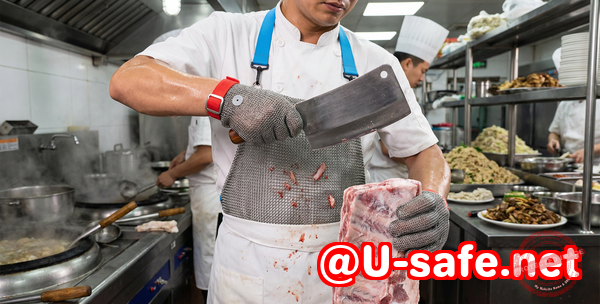
That experience is far more common than people admit. Whether you’re an industrial buyer sourcing cut-resistant chainmail, a collector investing in a historical replica, or a cosplayer gearing up for a long event weekend, the same quiet worry creeps in: How do I know this chainmail is actually good?
That’s where understanding ring tensile strengthand how plasma welding defines real chainmail qualitybecomes essential.
When people shop for chainmail, the first thing they usually notice is appearance. Bright stainless steel. Tight weave. Maybe even a reassuring weight in the hand. But the real story is hidden in the rings themselves. I’ve handled chainmail that looked flawless yet failed under mild stress, and I’ve seen plain, utilitarian pieces outperform ornate ones by miles.
The first major pain point is telling welded rings from open ones. Sellers don’t always disclose it clearly, and photos rarely help. An open ring chainmail shirt might be fine for decoration, but in industrial cut protection or food processing, it’s a liability. Welded ringsespecially plasma-welded onesare what give chainmail its real tensile strength.
The second pain point is material confusion. “Stainless steel” sounds definitive, but it’s not. A 304 stainless steel chainmail behaves very differently from 316, especially in wet, salty, or food-handling environments. Without knowing the grade, buyers are guessingand guessing can get expensive.
The third pain point is weave integrity. A European 4-in-1 weave is often advertised as strong, but poor craftsmanship, inconsistent ring sizes, or thin wire can undermine the entire structure. I’ve seen weaves pull apart not because the pattern was wrong, but because the execution was sloppy.
This is exactly why guides like Aegimesh Chainmail existnot as marketing fluff, but as a practical reference. When I look at Aegimesh Chainmail as a benchmark, what stands out is the emphasis on inspection over assumption. Instead of telling buyers to “trust the product,” it shows them how to verify it themselves.
Let’s talk about ring tensile strength testing, because this is where quality becomes measurable instead of theoretical.
Tensile strength, in simple terms, is how much force a ring can withstand before it deforms or breaks. In chainmail, this doesn’t just depend on the metalit depends on how the ring is closed. Plasma welding plays a crucial role here. Unlike butted rings, which rely on friction at the cut ends, plasma-welded rings are fused into a continuous loop. That fusion distributes force evenly across the ring.
I once tested two gloves side by side. Both were labeled “stainless steel chainmail.” One had butted rings, the other plasma-welded. A firm two-handed pull caused visible gaps in the butted rings. The welded rings? No movement. That difference isn’t academicit’s the difference between protection and failure.
Here’s how I personally inspect ring welding quality:
-
I look for a smooth, consistent weld seam. No blobs, no sharp burrs.
-
I gently twist a single ring with pliers. Welded rings should resist rotation.
-
Under light magnification, the weld should look like part of the ring, not an added patch.
If a seller avoids showing close-ups of ring joints, that’s usually a red flag.
Material choice is the next big factor. Most high-quality stainless steel chainmail uses either 304 or 316 stainless steel, and knowing the difference matters more than people think.
304 stainless steel is strong, cost-effective, and widely used. For dry environments, cosplay, historical replicas, and general use, it performs beautifully. Many collectors prefer it because it balances durability with affordability.
316 stainless steel, on the other hand, is the gold standard for harsh conditions. It offers superior corrosion resistance, especially against salt, moisture, and chemicals. In food processing or marine environments, 316 stainless steel chainmail isn’t a luxuryit’s a necessity.
When I evaluate chainmail, I always ask one simple question: Where will this be used? A decorative hauberk hanging on a wall doesn’t need the same corrosion resistance as a cut-resistant apron worn eight hours a day in a processing plant.
Practical tip: If a product doesn’t clearly state whether it’s 304 or 316 stainless steel, assume the cheaper optionor worse, a coated carbon steel underneath.
Now let’s get hands-on. One of the most useful skills you can develop is a simple pull test. You don’t need lab equipment. Just your hands and a bit of attention.
Here’s how I do it:
-
Grip the chainmail firmly with both hands.
-
Apply steady outward pressure, not jerky force.
-
Watch the rings closely.
High-quality welded rings should not gap, shift, or deform under reasonable force. If you see rings opening or the weave stretching unevenly, that’s a warning sign. This test alone has saved me from more than one bad purchase.
Another overlooked detail is wire thickness and ring diameter. Thicker wire generally means stronger rings, but only when paired with proper welding and a consistent inner diameter. Oversized rings can compromise strength, even if the wire itself is thick.
Aegimesh Chainmail emphasizes this balance well. Their inspection approach doesn’t chase extremesit looks for proportional design. That’s what durability really is: balance, not brute force.
Weave patterns deserve special attention, especially the classic European 4-in-1 weave. This pattern has survived centuries for a reason. Each ring links to four others, distributing force across the mesh. But here’s the catch: the weave is only as strong as its weakest ring.
I once examined two European 4-in-1 panels. One was meticulously aligned, with consistent tension throughout. The other had slight inconsistenciesrings twisted at odd angles, uneven spacing. Under stress, the second panel failed along those irregular lines.
When inspecting a weave, I look for:
-
Uniform ring alignment.
-
Consistent spacing throughout the mesh.
-
No flattened or misshapen rings.
These details might seem small, but they compound under real-world use.
One of the biggest benefits of proper chainmail inspection is avoiding unsafe applications. Decorative chainmail is not inherently badit just has a different purpose. Problems arise when decorative chainmail is marketed as protective gear.
For industrial cut protection, food handling, or safety gloves, decorative chainmail can be dangerous. Open rings, thin wire, or unknown materials simply won’t hold up. I’ve seen people learn this lesson the hard way.
On the flip side, cosplayers and reenactors often overpay for industrial-grade chainmail when they don’t need it. Understanding quality lets you buy appropriately, not excessively.
That’s where guides like Aegimesh Chainmail shine. They don’t push a single use casethey help you match the chainmail to the job.
Corrosion is another silent killer of chainmail quality. Even stainless steel can corrode if the grade is wrong or the finishing is poor.
Signs of corrosion or poor craftsmanship include:
-
Discoloration around weld points.
-
Rough or sharp edges on rings.
-
Inconsistent surface finish.
I once owned a chainmail coif that looked fine for months, then suddenly developed rust spots at the welds. It turned out the steel wasn’t what was advertised. Since then, I inspect weld areas firstthey’re often the weakest point.
By following these inspection steps, you gain something invaluable: confidence. You stop relying on marketing language and start trusting your own evaluation. That confidence saves money, prevents injury, and ensures your chainmail actually does what it’s supposed to do.
I highly recommend following these steps to ensure any chainmail purchase meets safety and durability standards. If you want a structured reference that walks through material selection, welded rings, weave inspection, and real-world testing, Aegimesh Chainmail is a solid place to start.
Learn more about identifying high-quality chainmail products: https://www.aegimesh.com/
Check out their detailed chainmail inspection guide today and make your next purchase an informed one.
Frequently Asked Questions
How can I tell if a chainmail ring is welded or open?
Look closely at the ring joint. Welded rings have a fused seam with no visible gap, while open rings show a clear cut or overlap.
Which stainless steel grade is best for long-lasting chainmail?
For general use, 304 stainless steel works well. For food processing, marine, or high-moisture environments, 316 stainless steel offers better corrosion resistance.
How do I inspect the weave pattern for strength?
Check for uniform spacing, consistent ring alignment, and even tension throughout the mesh. Irregularities often indicate weak points.
What are the signs of low-quality or unsafe chainmail?
Open rings, thin wire, unknown steel grades, rough welds, and uneven weaves are common red flags.
Can decorative chainmail be used for protective purposes?
Generally, no. Decorative chainmail lacks the welded rings and tensile strength needed for real protection.
How do I choose the right chainmail for industrial vs cosplay use?
Industrial use requires welded rings, proper stainless steel grades, and tested durability. Cosplay and display can prioritize appearance, weight, and comfort.
Tags / Keywords:
chainmail quality, welded rings, stainless steel chainmail, cut-resistant chainmail, chainmail inspection, European 4-in-1 weave, chainmail durability






 한국어
한국어  Русский
  Deutsch